
Wild Boar Spirit Animal Meaning: Protective Readiness and Real Boundaries
~4 min read
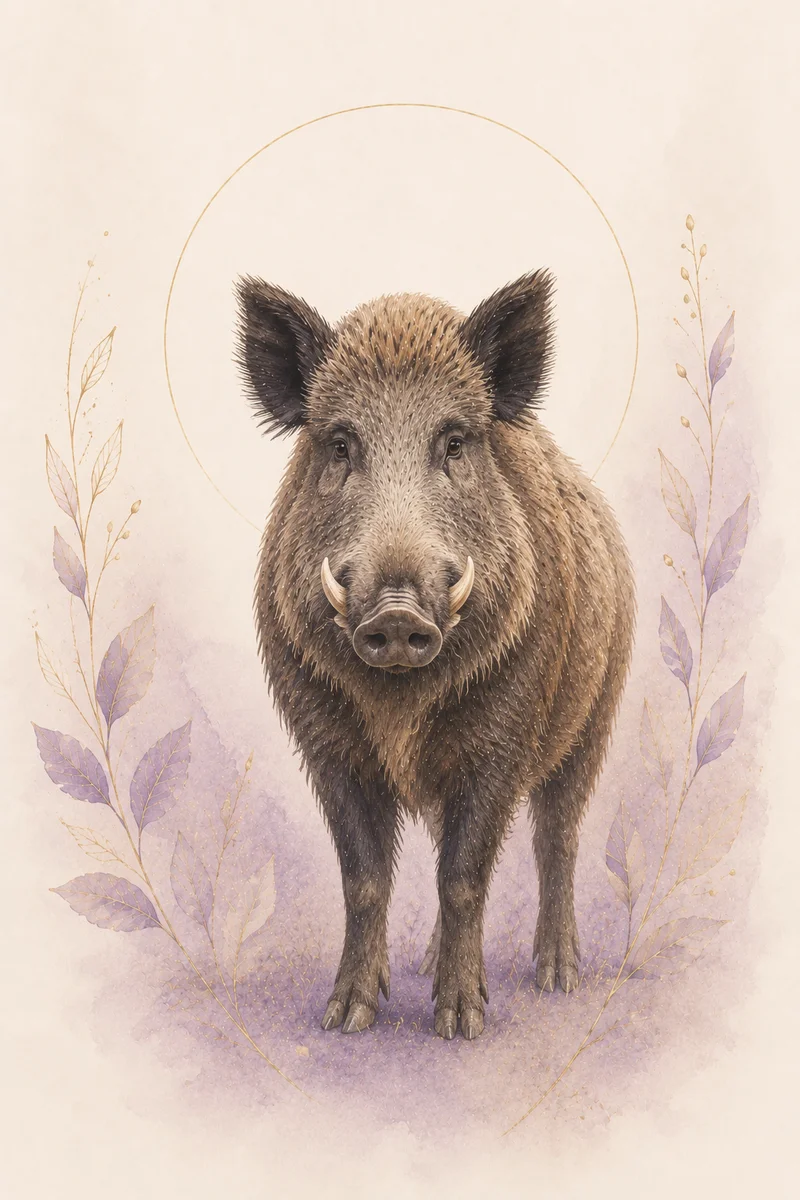
Most of a wild boar’s day is spent quietly rooting through leaf litter and undergrowth — unhurried, easy to overlook, in no rush to be anywhere else. From a distance, it’s the kind of animal that looks almost sleepy.
That calm holds right up until something crosses a real line — a sow with piglets, a threat that won’t back off — and then the same unhurried animal turns fast, forceful, and completely serious. Wild boar symbolism lives in that particular contrast: readiness that stays quiet until it’s actually needed.
Real boundaries
Controlled ferocity
Threat response
Fast trigger
Wild Boar Spirit Animal — What the Wild Boar Means
At the center of wild boar symbolism is a readiness to defend what actually matters — sharp enough that it has to be aimed carefully. This isn’t aggression sought out for its own sake; wild boars generally prefer to avoid conflict altogether, and the defense only shows up once there’s no other option left.
That readiness stays mostly dormant, a felt sense held in reserve rather than on display, until something crosses a real line. The harder part is the line itself: telling a genuine threat apart from something that only felt like one in the moment, before the reaction fires.
Real Wild Boar Behavior Behind the Symbol
Wild boars are omnivorous and generally avoidant of conflict, typically fleeing from danger first rather than confronting it. Females and their young live in cohesive social groups called sounders, while adult males are largely solitary outside the breeding season. Once genuinely cornered or threatened — sows protecting piglets especially — a wild boar will charge and defend fiercely rather than continue retreating.
That defense relies on strength, sharp tusks, and a thick hide, used at close range as a last resort once speed and avoidance have already failed to remove the threat. The sequence matters: flight comes first, force comes only after flight has stopped being an option.
Sources on the real behavior behind this symbol: merckvetmanual.com, nationalgeographic.com. Full methodology and all 64 animals: see our methodology and sources.
Light and Shadow
In its healthy form, wild boar energy defends real boundaries decisively, then lets that readiness settle back down once the actual threat has passed. The shadow side is a fast, forceful reaction to something that was only ever a perceived threat — full defensive force aimed at a target that didn’t actually warrant it.
Worth naming clearly: this isn’t predatory aggression; wild boars are omnivorous, and their defense is triggered by feeling cornered or protecting young, not by seeking out conflict. And toughness here doesn’t mean an absence of vulnerability — much of that fiercest defense is aimed specifically at sheltering something it’s protecting.
Wild Boar Energy in Love, Career, and Growth
In love, this defends a partner or relationship fiercely once it feels genuinely threatened — worth watching for reacting to a perceived slight as though it were an actual attack.
In career, it holds real professional boundaries and pushes back hard when they’re actually crossed, though it may respond disproportionately to feedback that wasn’t actually a threat.
In personal growth, it often points toward one more breath between feeling threatened and reacting with full force — enough of a pause to check whether the danger is actually real.
The Inner Conflict — and Today’s Impulse
Wild boar energy carries a lasting pull between assertiveness and blind reaction: its readiness to defend what matters is a real strength, but that same fast, forceful readiness can fire before it’s actually clear whether the threat is real. The point isn’t suppressing that readiness — it’s letting one more breath land between the perceived threat and the response.
What tends to help most isn’t less capacity to defend itself — it’s trust that it can stand down once a threat has passed, and enough safety to test whether that pause actually holds.
💭 Was that actually a real threat, or did it just feel like one in the moment?
Real defense protects something specific — it doesn’t need to hit everything nearby.
Frequently Asked Questions
Is the wild boar my spirit animal?
It can be, when you are thinking about protecting what matters and holding a real boundary. Spirit animal and power animal describe the same thing here: an animal whose qualities reflect a theme in your life right now, rather than a permanent identity. Many people read the wild boar as calm and unhurried until a true line is crossed. If that picture feels familiar, the Spirit Animal Quiz can show how close it feels today.
Does the wild boar power animal mean I’m naturally aggressive?
Not primarily. Wild boars generally avoid conflict and flee first — the fierce defense only appears once retreat genuinely isn’t an option anymore, especially when protecting young. It’s about proportionate readiness, not aggression sought for its own sake.
What’s the difference between the wild boar and the badger as power animals?
Badger holds its ground steadily and stays ready to confront without needing to be cornered first. Wild boar generally avoids conflict and flees first, then reacts fast and forcefully once truly cornered.
Can the wild boar appear when someone keeps overreacting to things that turn out not to be real threats?
Yes — often as a prompt to build in more pause between feeling threatened and reacting with full force. If that pattern is happening often enough to strain relationships or feel exhausting, it’s worth naming it to a trusted person or a professional, rather than treating it as something to just push through.
The idea of a power animal comes from shamanic and animistic traditions found in many cultures, and is widely used today in Neoshamanism.
Where do you already live this? Where are you still reaching for it? Where might you be stuck in its shadow side? Marie can help you sit with all three.
Related Power Animals
Rhino — shares the theme of strength with a defensive edge, but leans more into power paired with a genuine physical limitation in eyesight, while wild boar’s tension is healthy self-defense that risks tipping into blind, reactive aggression.
Badger — also about willingness to defend a boundary, but leans more into holding ground steadily without needing to be cornered first, while wild boar generally avoids conflict and reacts fast and forcefully only once truly cornered.
