
Seagull Spirit Animal Meaning: Adaptability, Resourcefulness and Visibility
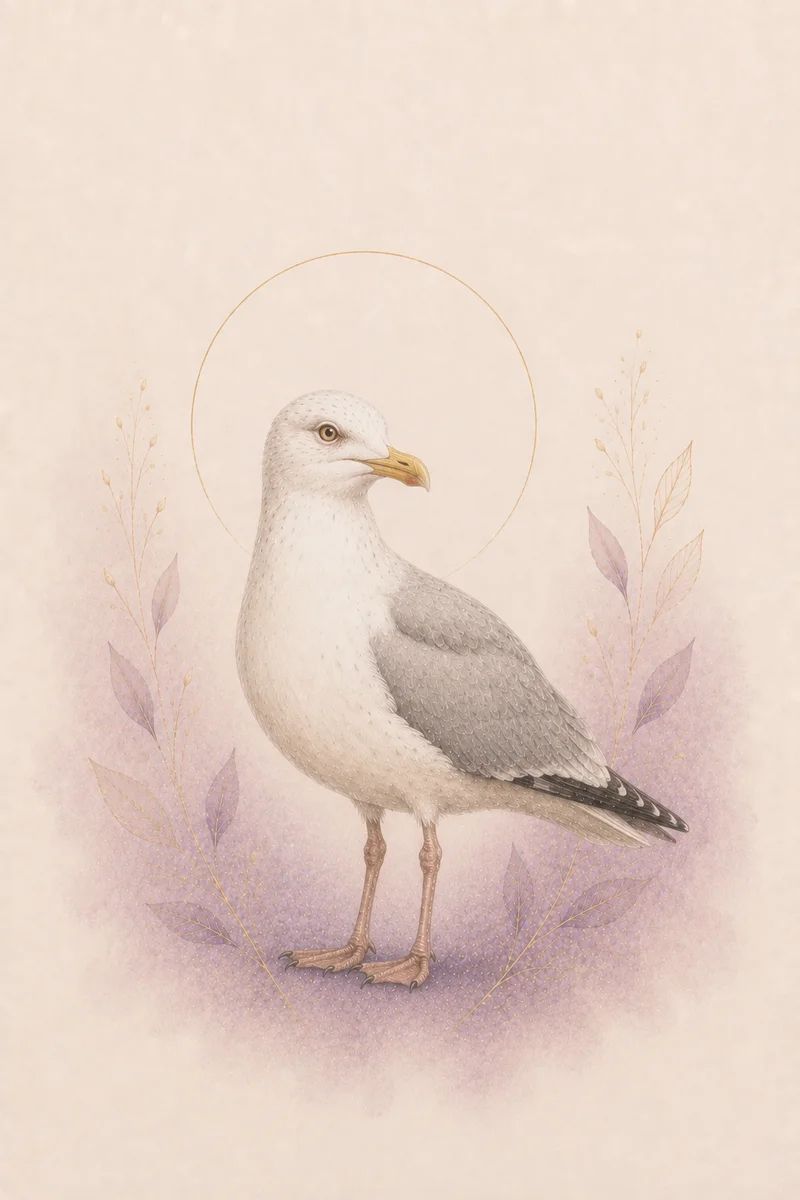
~4 min read
A gull can dive for fish in open surf in the morning and be working a crowded parking lot for scraps by afternoon, calling loudly the entire time it does it. “Seagull” isn’t even one strict species — it covers a wide family of gulls sharing this same restless, resourceful streak.
That comfort moving between two different worlds, and staying loud and visible in both, is the core of what a gull carries as a symbol.
Resourcefulness
Moving between worlds
Feeling undignified
Seagull Spirit Animal — What the Seagull Means
There’s a loud, visible resourcefulness at the center of seagull symbolism — the ability to move fluidly between two different environments and find real opportunity in both, without needing either one to fully claim it. That adaptability isn’t quiet; it’s meant to be seen and heard, not hidden.
Underneath the confidence sits a real, quieter wish: to be taken seriously for that resourcefulness rather than dismissed for being loud about it.
Real Seagull Behavior Behind the Symbol
Gulls are highly opportunistic omnivores that forage across both marine or intertidal environments and human-altered settings — landfill sites, parking lots, open-air markets — often within the same day. They nest in large, dense, vocally active colonies, form long-term pair bonds, and share chick-rearing duties, despite the visible squabbling that goes on within the colony itself. That noise is mostly about coordination, not conflict — a busy colony sounds chaotic long before it actually is.
They use a large repertoire of distinct calls to coordinate colony defense, alarm, and territory, and shift foraging strategy and habitat readily to exploit whatever food source is currently available. That range of behavior is a sophisticated, adaptable survival strategy, not aimless scavenging.
Sources on the real behavior behind this symbol: allaboutbirds.org (Cornell Lab of Ornithology), audubon.org. Full methodology and all 64 animals: see our methodology and sources.
Light and Shadow
When it’s working well, seagull energy moves confidently and resourcefully between different worlds, without needing either one to fully claim it. The shadow side is grabbing at whatever’s available in the moment, with no real sense of its own direction or worth underneath the constant motion.
Worth naming clearly: this isn’t a “trash bird” or nuisance pattern — opportunistic foraging across environments is a sophisticated strategy — and loudness doesn’t mean a lack of intelligence or capability either. It’s resourcefulness working out loud, not aimlessness.
Seagull Energy in Love, Career, and Growth
In love, this brings the same resourceful, engaged energy to both easy and difficult seasons — worth watching for coming across as ungrounded to a partner who’s looking for quiet consistency instead.
In career, it thrives moving between very different environments, teams, or roles within the same week, though it can be read as opportunistic rather than skilled.
In personal growth, it often points toward recognizing visible resourcefulness as a real skill in its own right, not a lesser substitute for belonging fully to one place.
The Inner Conflict — and Today’s Impulse
Seagull energy holds a real tension between adaptation and dignity: it can move fluidly between two very different worlds and make a living in both, but that same loud, conspicuous flexibility can leave it uncertain whether it’s actually choosing its own shape or just doing whatever gets it through the day. What helps here isn’t quieting the adaptability down to seem more dignified — it’s recognizing that visible resourcefulness is a genuine skill, not a lesser substitute for belonging fully to one place.
Underneath, what’s often needed is a felt sense of its own worth that doesn’t depend on which world it’s currently working in, and the same respect it gives its own resourcefulness to actually show up somewhere else too.
💭 Where do you feel most like yourself — the loud parts included?
Being loud about surviving in two worlds is not the same as belonging to neither.
Frequently Asked Questions
Is the seagull my spirit animal?
It could be, if adaptability and being visible feel like part of your life at the moment. Spirit animal and power animal are used for the same idea here: an animal whose qualities mirror a theme right now, rather than a fixed identity. Gulls move easily between shoreline and busy human places, so the seagull can mirror resourcefulness that deserves to be taken seriously. The Spirit Animal Quiz can show how close it feels today.
Does the seagull power animal just mean I’m scrappy or opportunistic?
Not in a dismissive sense. Opportunistic foraging across very different environments is a sophisticated, deliberate survival strategy, not random scavenging — the symbolism is about resourceful adaptability, not aimlessness.
What’s the difference between the seagull and the chameleon as power animals?
Chameleon adapts by blending quietly into whichever setting it’s currently in. Seagull adapts by staying conspicuous and vocal across contexts — its adaptability is meant to be seen, not hidden.
Can the seagull appear when someone is moving between two very different parts of their life?
Yes — often as a nudge to recognize that resourcefulness itself, not a signal that either world is the wrong fit. If the switching starts to feel disorienting rather than manageable, it can help to talk it through with a trusted person or a professional.
The idea of a power animal comes from shamanic and animistic traditions found in many cultures, and is widely used today in Neoshamanism.
A page can only tell you what the seagull means in general. Marie can help you find out what it means for you, right now.
Related Power Animals
Coyote — shares the theme of adaptation across changing conditions, but leans more into resilience through ongoing instability itself, while seagull’s adaptability moves between two distinct, relatively stable worlds.
Chameleon — also about adaptation, but leans more into blending quietly into whichever setting it’s in, while seagull adapts by staying conspicuous and vocal across contexts.
