
Raven Spirit Animal Meaning: Pattern Recognition, Insight and Discernment
~6 min read
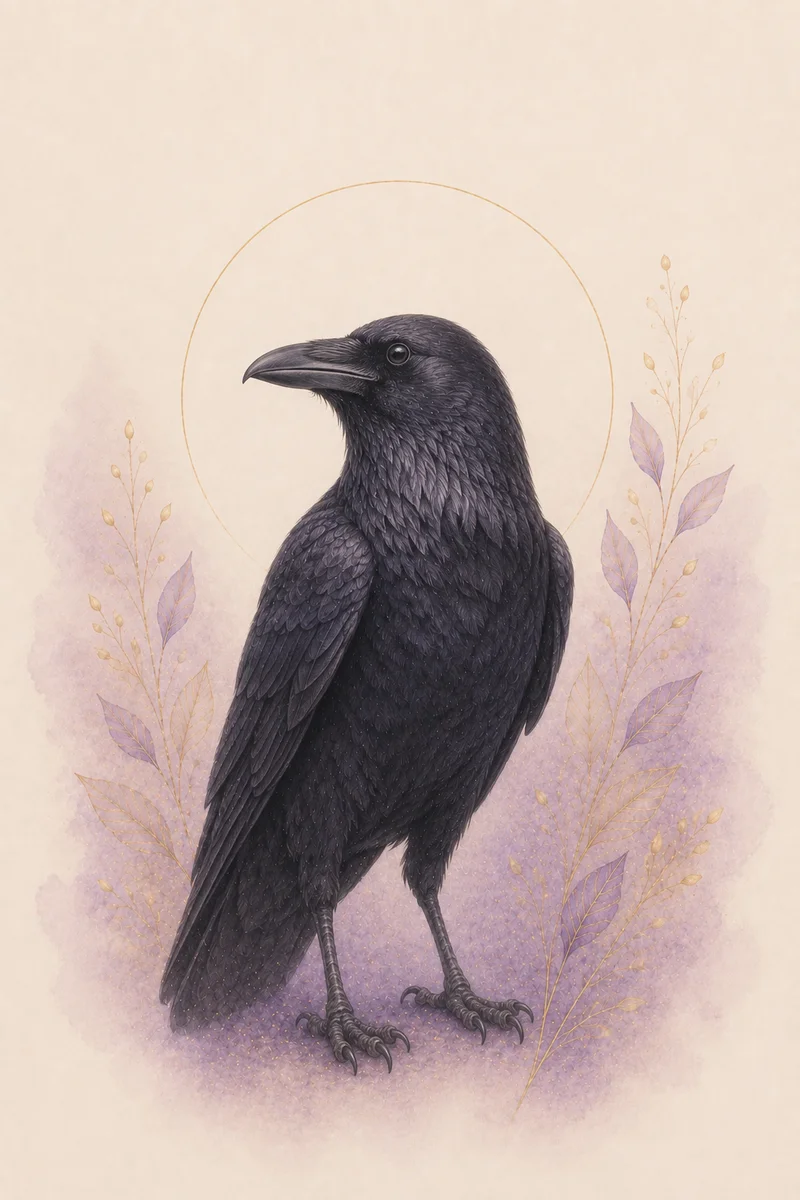
Ravens carry a reputation they never really earned. Centuries of folklore cast them as omens of death or misfortune — dark shapes to be wary of rather than watched closely. Spend any real time with what a raven actually does, though, and a very different animal emerges: one of the most cognitively sophisticated birds studied, capable of tool use, genuine planning ahead, and tracking what other minds can and can’t perceive — closer to a working mind than to a warning sign.
What raven symbolism is really built on has much more to do with sharp, active insight than with anything ominous — a mind that keeps finding the pattern underneath the pattern, and has to decide, every time, how far to trust what it’s found.
Insight
Inference
Perspective-taking
Treating a read as settled fact
Mistaken for an omen
Raven Spirit Animal — What the Raven Means
There’s a sharp, interpretive quality at the center of raven symbolism: a mind that keeps finding the pattern underneath the pattern, and has to decide, every single time, how far to trust what it’s found. A raven’s intelligence isn’t just about noticing details — it’s about actively reasoning through cause, effect, and other people’s likely intentions, often before anyone else has said a word out loud.
That shows up as a strong pull to interpret meaning and intention behind what it observes, not just the observation itself, and real, ongoing uncertainty about where accurate insight actually ends and its own projection quietly begins. Underneath, that’s the whole tension this animal carries: genuine, well-earned insight, sitting right next to the real risk of reading too much into what it sees, with no easy way to separate the two from the inside.
Real Raven Behavior Behind the Symbol
Ravens are among the most cognitively sophisticated birds studied, capable of problem-solving, tool use, and planning ahead for future needs rather than only reacting to whatever’s directly in front of them. They’re highly social, with a complex vocal repertoire and long-term pair bonds; young, non-breeding ravens often form loose, wandering social groups for a time before eventually settling into a territory of their own.
Ravens cache food for later, and have been documented adjusting their caching behavior depending on which other ravens are watching — real evidence they track what others can and can’t perceive, not merely what they perceive themselves. That’s a genuinely advanced form of perspective-taking, closer to modeling another mind than to simple habit. They’re also known to lead or follow other predators, including wolves, to carcasses they can’t open alone, effectively using another animal’s strength to solve a problem their own body can’t.
Sources on the real behavior behind this symbol: nationalgeographic.com. Full methodology and all 64 animals: see our methodology and sources.
Light and Shadow
In a healthy expression, raven energy trusts its read on a pattern while staying genuinely open to being wrong about the intention or meaning behind it — insight held loosely enough to still be checked against reality. The shadow side shows up when that openness disappears: reading intention, threat, or a hidden agenda into ambiguous situations that may not actually contain any of it, then acting on that reading as though it were already confirmed fact.
Worth naming clearly: this doesn’t mean someone is manipulative or scheming — accurate pattern recognition isn’t the same as bad intent — and it isn’t an omen of death or misfortune either; that association is longstanding folklore, not anything real about the bird or what it actually represents. Not every insight it has is automatically correct, either — the real risk here is specifically over-reading, not simple observation itself, and the two are worth telling apart rather than treating as the same failure.
Raven Energy in Love, Career, and Growth
In love, this tends to read a relationship’s real dynamics with genuine accuracy, often before either person has named them out loud — worth watching for assuming motives that were never actually there.
In career, it excels at spotting patterns, risks, or connections that formal analysis misses entirely, though its reads deserve real testing before being treated as settled.
In personal growth, it benefits from mentally demanding, truly novel problems, and from a trusted second perspective that can confirm or gently challenge what it’s read into a situation.
The Inner Conflict — and Today’s Impulse
Raven energy sits with an unresolved tension between insight and projection: it genuinely recognizes patterns that are actually there, but the same interpretive mind that finds them can start reading intention, threat, or meaning into situations that may not really contain any of it. A constructive response isn’t distrusting its own read entirely — it’s holding each interpretation as testable rather than settled, checking it against real evidence before treating it as fact and acting on it accordingly, especially where the stakes of being wrong are high.
The deeper need here isn’t less pattern-recognition — it’s room to keep following its own reasoning without being dismissed, alongside a reliable way to check what it’s read into a situation before fully trusting it as true.
💭 Where has your read on a situation been genuine insight — and where might it have been your own projection?
Seeing the pattern is not the same as knowing what it means.
Frequently Asked Questions
Is the raven my spirit animal?
Many people read the raven as a mirror for moments when you are noticing patterns and weighing how far your own interpretations can be trusted. Spirit animal and power animal mean the same thing here: an animal whose qualities reflect a theme in your life right now, not a fixed identity. The Spirit Animal Quiz can show how close it feels today.
Does the raven power animal mean I’m manipulative or have hidden motives?
Not primarily. Accurate pattern recognition isn’t the same as bad intent — noticing what others miss doesn’t mean scheming against them. This also isn’t an omen of death or misfortune; that association comes from centuries-old folklore, not anything real about the bird or what it represents.
What’s the difference between the raven and the owl as power animals?
Raven’s insight is active and inferential — reading cause and intention into what it observes. Owl’s is a quieter, intuitive knowing that deepens through solitude and darkness rather than through active reasoning.
Can the raven appear when I keep assuming hidden threat or bad intent in situations that might not deserve it?
Yes — often as a prompt to test a read against real evidence rather than treat it as already confirmed. If assuming hidden intent or threat behind ordinary situations has become a persistent, exhausting pattern — one that keeps repeating regardless of how much evidence turns up against it — it’s worth naming that concretely to a trusted person or a professional, rather than continuing to reason through it alone every single time.
The idea of a power animal comes from shamanic and animistic traditions found in many cultures, and is widely used today in Neoshamanism.
If this isn’t quite about you — maybe it’s about someone else. Talk to Marie about what you’re noticing in them, and see what animal actually fits.
Related Power Animals
Owl — shares the theme of perceiving what others miss, but leans more into a quieter, intuitive knowing that deepens through solitude and darkness, while raven’s insight is active and inferential, reading cause and intention into what it observes.
Lynx — also about noticing what others overlook, but leans more into a hidden, watchful perceptiveness turned toward staying unseen, while raven’s noticing is outward and interpretive, often about other minds and their intentions.
