
Meerkat Spirit Animal Meaning: Vigilance, Community and Rest
~7 min read
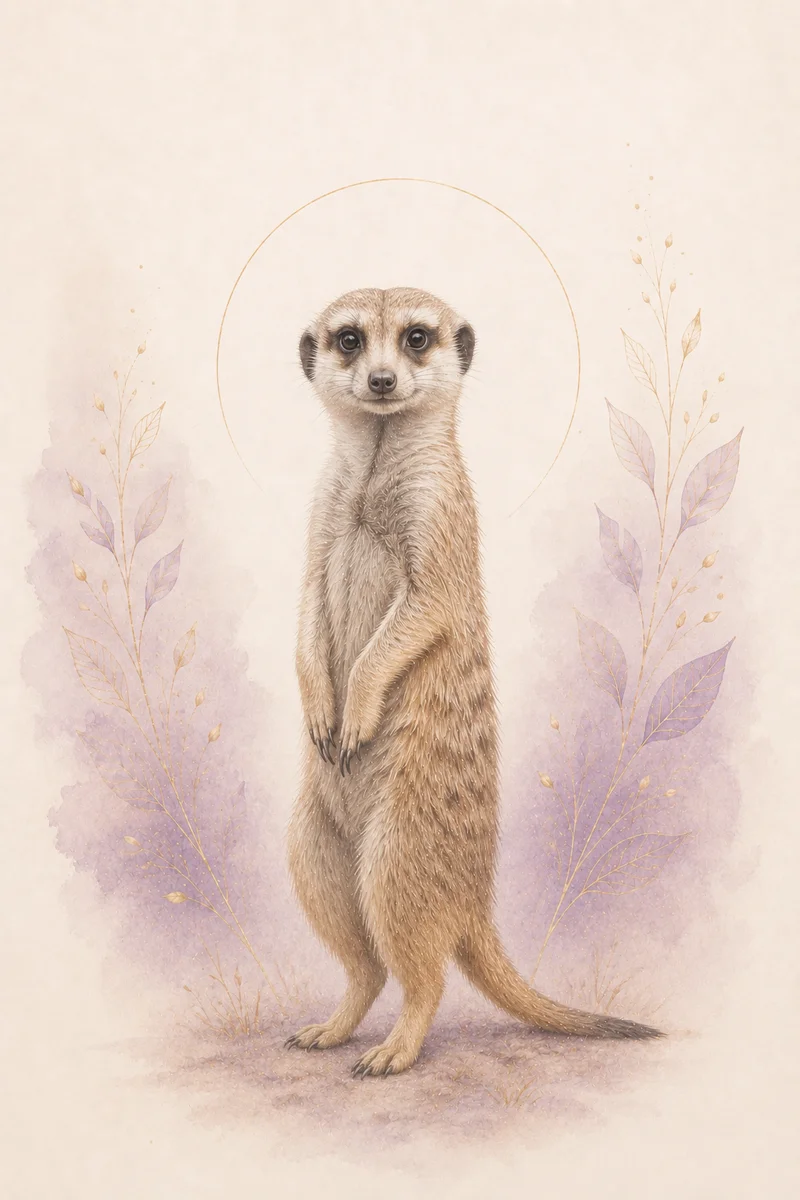
Meerkats are often pictured as the comic sentries of the animal world — small, upright, endlessly alert. Watch a mob for a while, though, and the comedy fades into something closer to devotion: one animal standing still and exposed on a raised mound, scanning constantly, so the rest of the group can forage, rest, and raise young without having to watch for danger themselves — a cost and a value that alternate, mob member by mob member, throughout the day.
Cooperative care
Community safety
Practical attentiveness
Difficulty resting
Burnout from watching
Meerkat Spirit Animal — What the Meerkat Means
Meerkat symbolism centers on shared vigilance — the role of standing watch so that others can rest, and being relied on for early warning before anyone else has noticed anything is wrong. That kind of hyper-awareness can be a real gift, but it can also become a burden when it never gets to switch off.
That shows up as taking on watchful or protective roles within a family or team, a hands-on kind of care that reads as attentiveness rather than words, and a comfort with community life that assumes responsibility is meant to be shared, not carried alone.
Real Meerkat Behavior Behind the Symbol
Meerkats live in tight, cooperative groups called mobs, and take turns on sentry duty from a raised position while the rest of the group forages nearby — an arrangement that rotates rather than falling permanently to one individual. Pups are raised cooperatively by the whole group, not only by their biological parents, and distinct vocalizations warn the mob of different kinds of threats, so everyone knows not just that danger is near, but roughly what kind.
Extensive, shared burrow systems give the group collective shelter to retreat to. None of this depends on one permanent watcher: a meerkat’s protective instinct is real, but the system it belongs to is built around rotation, not one animal carrying the weight indefinitely.
Sources on the real behavior behind this symbol: Clutton-Brock, T.H. et al. (1999). Selfish Sentinels in Cooperative Mammals. Science, 284(5420), 1640–1644; cam.ac.uk. Full methodology and all 64 animals: see our methodology and sources.
Light and Shadow
At its healthiest, meerkat energy takes its turn standing watch and trusts others to take theirs — vigilance that’s shared rather than hoarded. The shadow side is easy to miss because it can look like simple dedication: being unable to stop scanning for threats even once things are actually safe, and burning out from vigilance that never gets handed off.
Worth naming clearly: this isn’t only ever a wound — real alertness can be a genuine strength when it’s balanced with real rest — and it doesn’t automatically mean leadership status either. Meerkat groups rotate sentry duty; there’s no single, permanent watcher carrying it all.
Meerkat Energy in Love, Career, and Growth
In love, this tends to show up as care expressed through practical attentiveness rather than big declarations — noticing what’s needed before it has to be asked for.
In career, it often excels in roles that require risk-awareness, though it can burn out fast without a team that actually rotates responsibility rather than just talking about it.
In personal growth, it frequently points toward learning that rest isn’t a failure to protect — and that watching for danger and never resting for safety are not the same job.
The Inner Conflict — and Today’s Impulse
Meerkat energy carries a lasting pull between vigilance and rest: its whole value comes from staying alert, but a watcher who never actually rests eventually has nothing left to protect with. What helps here isn’t abandoning vigilance — it’s exploring whether it can become shared, and being honest about when the surrounding group isn’t yet reliable enough to make real rest possible.
What tends to help most isn’t praise for staying alert — it’s real permission to rest, and trust that the group will actually hold the watch without it. If that vigilance has become constant or exhausting, it’s worth naming to a professional rather than just managing it alone.
💭 When did you last actually let someone else take the watch?
Watching for danger and never resting for safety are not the same job.
Frequently Asked Questions
Is the meerkat my spirit animal?
If you value shared watchfulness, taking turns keeping an eye out so everyone can rest, the meerkat may fit. Spirit animal and power animal are used for the same idea here: an animal whose qualities mirror a theme in your life now, not a fixed identity. Meerkats rotate sentry duty within their mob, and that handing-off can be a useful mirror. The Spirit Animal Quiz can show how close it feels today.
Does the meerkat power animal mean I have to be the leader of my group?
Not necessarily. Meerkat groups actually rotate sentry duty rather than relying on one permanent watcher — the symbolism is about shared vigilance, not fixed leadership.
What’s the difference between the meerkat and the wolf as power animals?
Wolf symbolism centers on loyalty and belonging earned within a committed pack. Meerkat symbolism leans more specifically into rotating watchfulness — protection that’s meant to be handed off, not just loyalty that’s meant to last.
Can the meerkat appear during a period of burnout from constantly looking out for others?
Yes — often as a prompt to notice whether vigilance has become constant rather than shared. If that alertness feels chronic or exhausting, it’s worth naming to a professional or someone you trust, rather than treating it as something to just push through alone.
The idea of a power animal comes from shamanic and animistic traditions found in many cultures, and is widely used today in Neoshamanism.
A page can only tell you what the meerkat means in general. Marie can help you find out what it means for you, right now.
Related Power Animals
Wolf — shares the theme of group protection, but leans more into loyalty and belonging earned over time, while meerkat’s protection is built specifically around rotating watchfulness.
Owl — shares a sense of watchfulness, but leans more toward solitary perception, while meerkat’s watching is explicitly cooperative, meant to be shared and eventually handed off.
