
Lynx Spirit Animal Meaning: Hidden Perception, Solitary Watchfulness and Quiet Wisdom
~5 min read
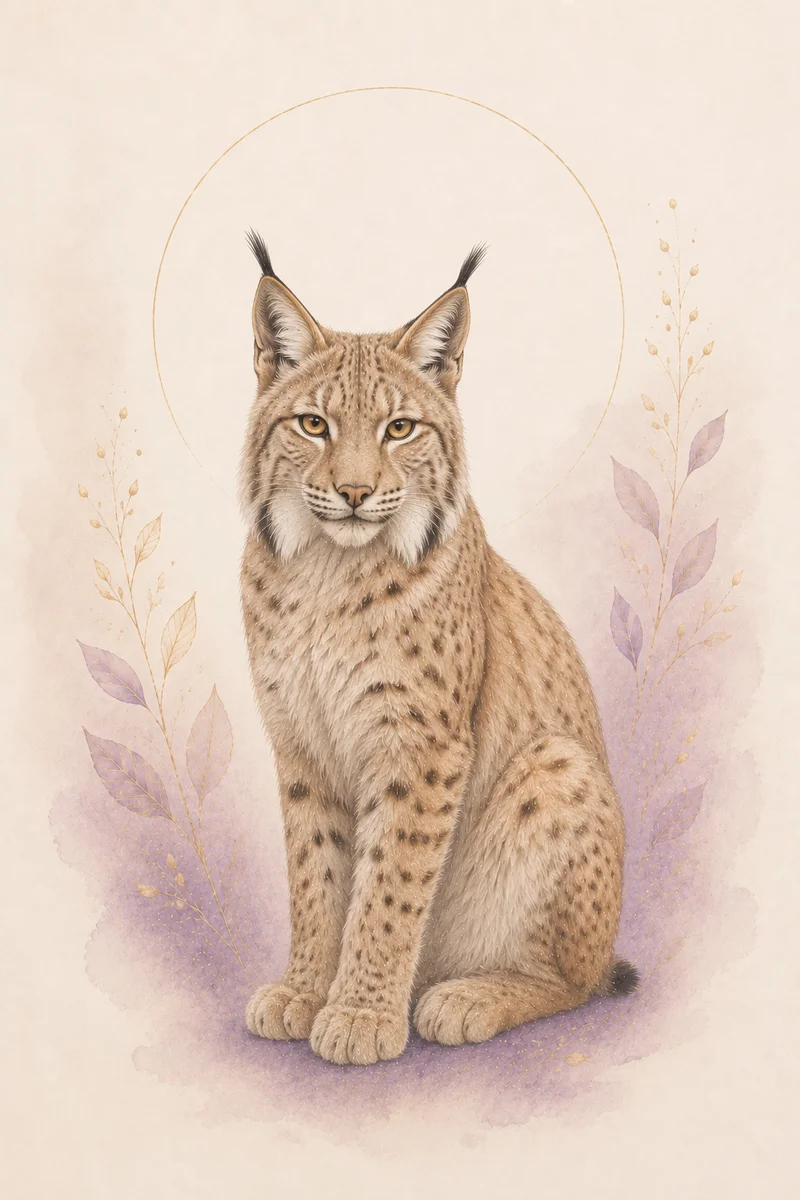
“I see everything happening here. I just don’t need anyone to know that I do.” That’s close to the quiet logic a lynx runs on — a watchfulness so complete it can stand in plain sight and still go entirely unnoticed.
A lynx’s whole survival strategy depends on staying hidden even where it’s locally common — researchers often rely on camera traps rather than actual sightings to confirm one is even there at all.
Solitary watchfulness
Quiet wisdom
Withdrawal
Insight that goes unvoiced
Being pushed to be more visible
Lynx Spirit Animal — What the Lynx Means
Lynx energy is a watchfulness that stays entirely private — noticing details and shifts in a situation that most people walk straight past, without needing to say a word about any of it to anyone. Its power isn’t in what gets shown; it’s in what gets quietly, accurately perceived and kept close, held rather than performed.
That shows up as a real, quiet confidence in what it perceives, without needing to prove it to anyone, and a strong pull toward withdrawal whenever things start to feel too exposed or too closely watched in return. Underneath runs a genuine risk: the very solitude that sharpens its perception can also cut it off entirely from anyone it might actually trust with what it sees, given the chance.
Real Lynx Behavior Behind the Symbol
Lynx are solitary, elusive wild cats with exceptional hearing and low-light vision, relying on stealth and short, controlled bursts of movement rather than a sustained chase across open ground. They stay hidden and quiet so consistently that even where a population is locally common, direct sightings stay rare — researchers frequently rely on camera traps rather than actual observation just to confirm a lynx’s presence at all.
Lynx are largely solitary outside brief mating encounters and a mother raising kittens, actively avoiding open exposure and dense contact with others of their kind. Staying that concealed isn’t a side effect of caution layered on top of some other strategy; it’s close to the core of how a lynx actually survives and hunts in the first place.
Sources on the real behavior behind this symbol: animaldiversity.org, bigcatrescue.org. Full methodology and all 64 animals: see our methodology and sources.
Light and Shadow
In a healthy expression, lynx energy lets its perceptiveness genuinely inform how it moves through the world, without needing to stay fully hidden just to feel safe using what it notices. The shadow side is withdrawing so completely that its perception has nowhere left to go — it stops being seen at all, even by people who have actually earned some trust along the way.
Worth naming clearly: none of this is unfriendliness or coldness — staying hidden here is about self-protection and real clarity, not dislike of anyone in particular. It also isn’t about negotiating boundaries within an existing closeness, the way it is for Cat; lynx’s issue is perceptual withdrawal, not intimacy or relational distance. And its quiet watching doesn’t automatically mean it expects danger, either — noticing is not the same as suspecting.
Lynx Energy in Love, Career, and Growth
In love, this notices far more about a partner or relationship than it ever says out loud — worth watching for staying so withdrawn that a partner never fully knows what it’s actually perceived or felt.
In career, it excels at spotting details, risks, or patterns that others consistently miss, especially in independent working conditions, though insight that never actually gets voiced out loud often goes entirely unrecognized.
In personal growth, it genuinely needs real, uninterrupted solitude to feel settled rather than exposed — and if withdrawal has become near-total and isolating, that’s worth naming to a professional rather than accepted as simply its nature.
The Inner Conflict — and Today’s Impulse
Lynx energy holds an ongoing tension between perception and isolation: it perceives with real clarity precisely because it stays hidden and apart, but that same withdrawal can leave it entirely cut off from anyone who might actually share in what it sees, or care to hear it. The point isn’t giving up the watchfulness or the solitude — it’s letting a small number of trusted others in on what it perceives, without needing to trade away either one to do it.
Underneath, what’s often needed isn’t more visibility or more talking — it’s enough solitude and cover to observe without feeling exposed, and at least one relationship where being perceptive doesn’t require staying fully hidden to feel safe.
💭 What have you noticed and kept entirely to yourself?
Being unseen and seeing clearly can happen at exactly the same time.
Frequently Asked Questions
Is the lynx my spirit animal?
Is your perception quiet and accurate, and do you tend to notice what others miss? Then the lynx may be a fitting mirror. On this site spirit animal and power animal mean the same thing: an animal whose qualities reflect a theme in your life right now, not a fixed identity. The lynx can also ask whether solitude has become withdrawal. The Spirit Animal Quiz can show how close it feels today.
Does the lynx power animal mean I’m unfriendly or suspicious of people?
Not at all. Staying hidden here is about self-protection and clarity, not dislike or distrust — lynx’s quiet watching doesn’t automatically mean it expects danger from anyone.
What’s the difference between the lynx and the owl as power animals?
Owl’s perception is an inward, intuitive knowing that sharpens through darkness and solitude. Lynx’s is an outward watchfulness kept hidden through withdrawal — noticing the world closely while staying unseen within it.
Can the lynx appear during a period of withdrawing from other people?
Yes — often as a sign that some withdrawal is genuinely serving real clarity right now, not a signal to disappear completely from everyone around you. If that withdrawal has turned into real isolation, it’s worth naming concretely to a trusted person or a professional, rather than assuming the watchfulness alone will meet that need on its own.
The idea of a power animal comes from shamanic and animistic traditions found in many cultures, and is widely used today in Neoshamanism.
A page can only tell you what the lynx means in general. Marie can help you find out what it means for you, right now.
Related Power Animals
Owl — shares the theme of quiet, hidden perception, but leans more into an inward, intuitive knowing that deepens through darkness, while lynx’s perception is an outward watchfulness kept hidden through active withdrawal.
Cat — shares the theme of independence, but leans more into relational boundaries within a closeness it has actively chosen, while lynx’s core theme is hidden perception maintained through genuine solitary withdrawal.
