
Hedgehog Power Animal Meaning: Protection, Softness and Earned Trust
~5 min read
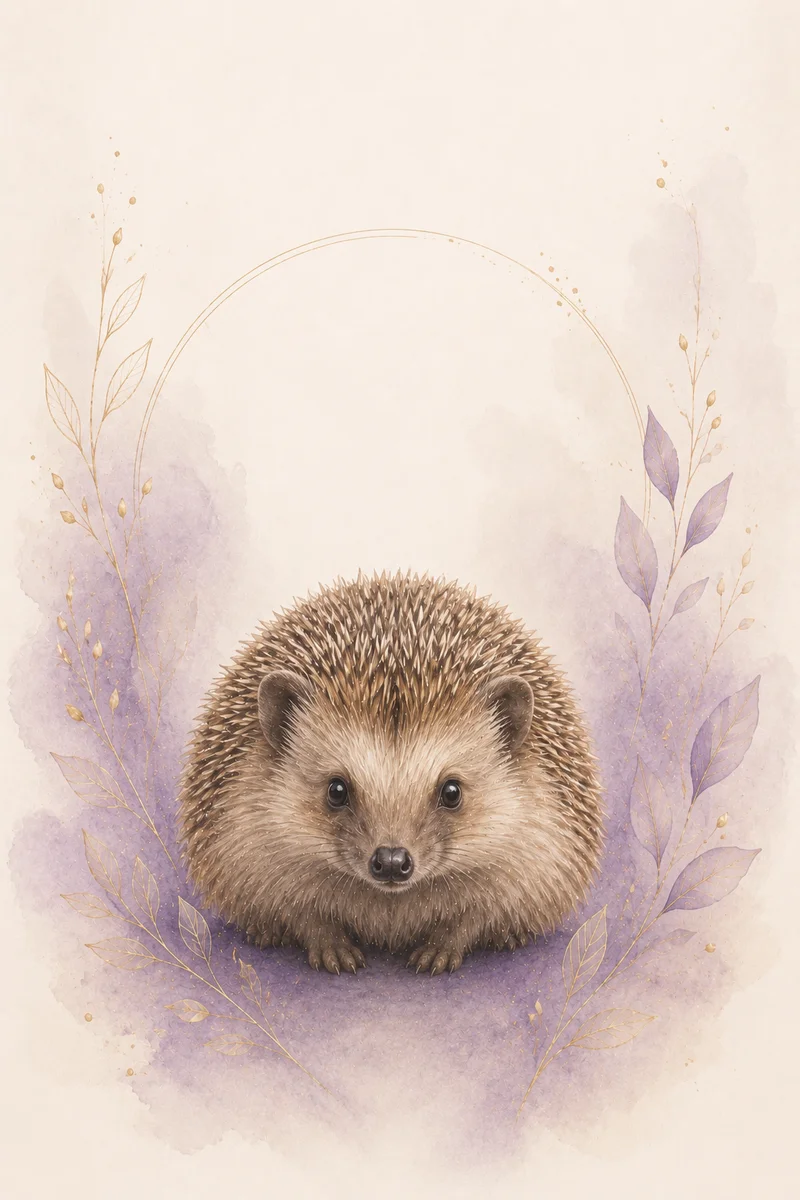
Spines read as a warning, so it’s easy to assume a hedgehog is bristling at the world — defensive by temperament, closed off by nature. The actual mechanics tell a different story: rolling into a ball and raising its spines is a hedgehog’s version of going still and quiet, not squaring up for a fight.
Underneath that passive armor is a genuinely soft-bodied animal that wants closeness as much as anything else does — it’s just built to protect that wish until it’s sure the closeness is safe.
Soft vulnerability
Measured trust
Gentle self-defense
Mistaken for coldness
Hedgehog Power Animal — What the Hedgehog Means
At the center of hedgehog symbolism is real softness, protected by boundaries that only open once trust has been earned. It curls inward or withdraws when something feels overwhelming, rather than confronting it head-on — and it warms slowly, but genuinely, once safety has been established. That slowness is not reluctance for its own sake; it’s a form of care aimed at the thing being protected.
Underneath sits a real, unresolved pull: a genuine longing for closeness, paired with a reflex built specifically to protect against being hurt by it. Neither side wins outright — the softness stays real even while it’s guarded, and the guarding stays real even while the wish for closeness never goes away. The two aren’t in competition so much as running side by side, one keeping the other safe enough to still exist.
Real Hedgehog Behavior Behind the Symbol
Hedgehogs are solitary, mostly nocturnal foragers that roll into a tight ball and erect thousands of sharp spines outward the moment they sense a threat — a passive defense built to make them an unpleasant mouthful, not an attack. Outside of brief mating encounters, they don’t live or forage in groups; closeness, when it happens, is occasional rather than constant.
Rather than relying on speed or fighting, hedgehogs depend almost entirely on those spines and the rolling response, which works precisely because it doesn’t require assessing a threat or choosing to escalate — it’s a reflex, not a decision made in the moment. Many hedgehog species living in cooler climates also hibernate through the cold, resource-scarce months to conserve energy — a strategy that doesn’t hold for every hedgehog species everywhere, since some live in climates where hibernation isn’t necessary at all.
Sources on the real behavior behind this symbol: britannica.com, hedgehogstreet.org. Full methodology and all 64 animals: see our methodology and sources.
Light and Shadow
In its healthy form, hedgehog energy lowers its guard gradually as real trust is earned, without needing to stay defensive forever once safety has been proven. The shadow side is quieter than open hostility: staying curled up defensively even with people who have already proven safe again and again, treating an old reflex as if it were still necessary evidence.
Worth naming clearly: this isn’t coldness or an absence of wanting closeness — the wish for connection is real, not missing. The spines aren’t aggression either; they’re passive protection, not an attack. And needing boundaries in the first place doesn’t make someone unfriendly or shut down — it makes the eventual opening actually mean something.
Hedgehog Energy in Love, Career, and Growth
In love, this tends to open slowly and needs real safety established before genuine vulnerability follows — worth watching for staying guarded long after a partner has proven trustworthy, over and over.
In career, it does careful, protected work well and often prefers depth over exposure, though it may withdraw under confrontational pressure rather than push back directly.
In personal growth, it often points toward testing safety in small, low-risk steps rather than staying fully closed or dropping every guard at once — one small unfurling at a time.
The Inner Conflict — and Today’s Impulse
Hedgehog energy holds an ongoing tension between closeness and protection: it genuinely wants connection, but its instinct to protect itself can keep it curled up even once real safety is present. The point isn’t dropping every guard at once, or staying fully closed either — it’s testing safety in small, low-risk steps, letting trust build in stages instead of all at once.
Underneath, what’s often needed isn’t pressure to just relax or stop being so defensive — it’s closeness that never demands the guard come down before it’s ready, and consistent proof of safety over time, not just a single gesture.
💭 Where might it feel safe enough to test one small step toward openness?
Softness that protects itself is still softness.
Frequently Asked Questions
Does the hedgehog power animal mean I’m being prickly or unfriendly?
Not really. A hedgehog’s spines are passive protection, not an attack — rolling up is closer to going quiet than squaring up for a fight. Needing boundaries doesn’t make someone cold or shut down; it protects something genuinely soft underneath.
What’s the difference between the hedgehog and the badger as power animals?
Hedgehog protects through passive withdrawal, rolling away from a threat rather than confronting it. Badger leans more into active, grounded readiness — holding a fixed line and only engaging if that line is genuinely pushed.
Can the hedgehog appear when trust has been hard to rebuild after being hurt?
Yes — often as a sign that the wish for closeness is still real, even while the guard stays up. If it’s been consistently hard to let anyone in, even people who’ve genuinely proven safe, it can help to work through that gradually with a trusted person or a professional, rather than expecting the guard to just come down on its own.
The idea of a power animal comes from shamanic and animistic traditions found in many cultures, and is widely used today in Neoshamanism.
Not sure if the hedgehog is really your animal, or if your situation actually calls for something else? Marie can help you tell the difference.
Related Power Animals
Badger — shares the theme of boundaries, but holds them through active readiness to confront if pushed, while hedgehog protects through passive withdrawal, rolling away from a threat instead.
Cat — shares closeness held on one’s own terms, but its distance is a deliberate, chosen form of autonomy, while hedgehog’s defenses are a protective reflex it’s actually working to lower.
