
Flamingo Spirit Animal Meaning: Visibility, Balance and Quiet Belonging
~7 min read
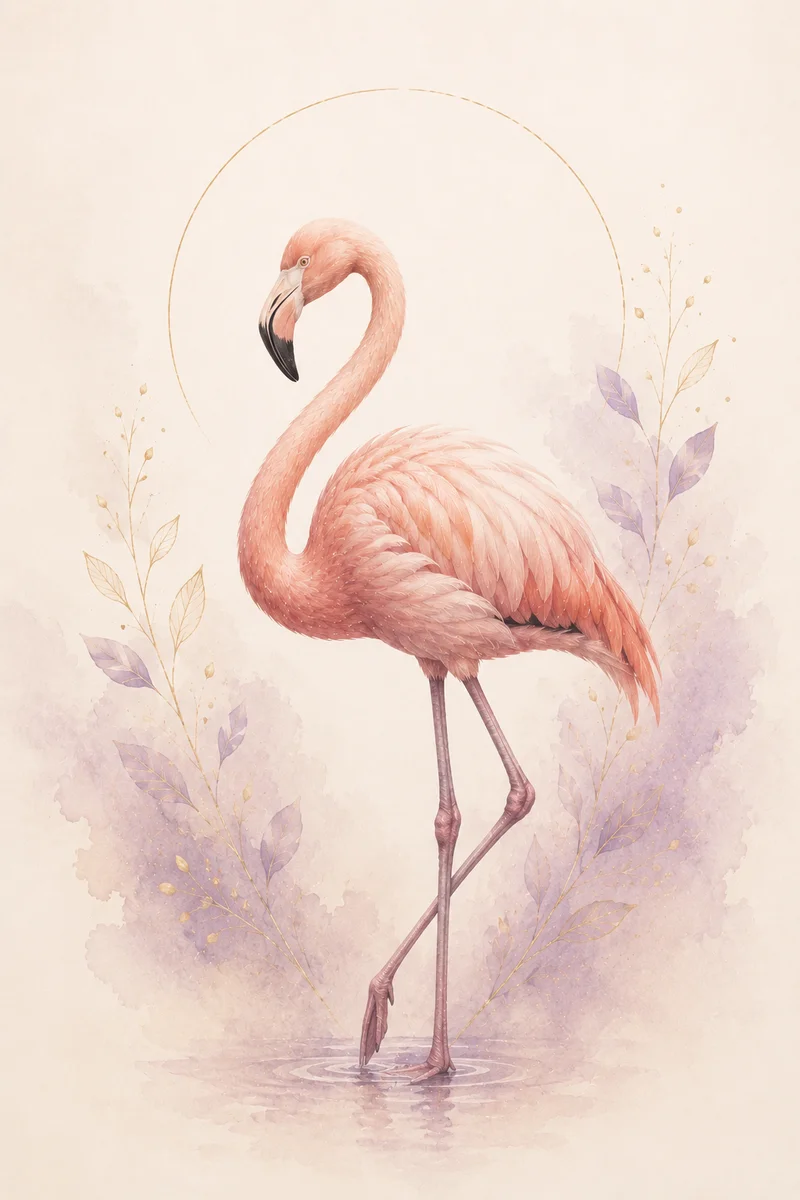
A flamingo’s color isn’t a choice — it comes directly from the algae and crustaceans in its diet, and a flamingo on different food turns pale grey. Even its famous one-legged stance appears to be an efficient resting posture, not a strain. There’s no performance underneath any of it, only biology standing in open water.
Visibility, here, was never sought. It’s simply what happens to a flamingo — and there’s a particular kind of steadiness in carrying that without needing it to mean anything more.
Balance
Quiet endurance
Collective belonging
Mistaken for vanity
Exhausted from blending in
Flamingo Spirit Animal — What the Flamingo Means
There’s a natural visibility at the center of flamingo symbolism — being conspicuous simply by existing, in a role, a family, or a community, without having sought that visibility out. It’s a body built for standing quietly present in open water, exactly as it is, without asking permission for the space it takes up.
That shows up as maintaining steady balance in situations others find precarious, standing out in a group simply by being present rather than performing, and a settled patience that doesn’t need to rush toward resolution or explanation.
Real Flamingo Behavior Behind the Symbol
Flamingos wade in shallow, often mineral-rich water, filter-feeding with their heads inverted, sweeping specialized structures in the beak through the water to strain out algae and small crustaceans. That diet is also where the color comes from — pink-to-red carotenoid pigments absorbed directly from what they eat, not anything chosen or performed.
They’re highly colonial, often breeding and living in flocks that can number in the thousands, which supports shared vigilance and coordinated group courtship displays. Their long-legged, one-legged resting stance appears to be a low-effort, structurally efficient posture, holding one position for long stretches before relocating together, as a flock, rather than alone.
Sources on the real behavior behind this symbol: oaklandzoo.org. Full methodology and all 64 animals: see our methodology and sources.
Light and Shadow
When it’s working well, flamingo energy stays balanced and visibly present without needing to shrink or perform to justify the space it occupies — visible, steady, unbothered by being seen. The shadow side grows anxious or self-conscious about that visibility, either overcorrecting into rigid stillness or exhausting itself trying to blend in where blending in was never really possible.
Worth naming clearly: this isn’t vanity or attention-seeking — the color and visibility come from biology and diet, not deliberate display. Nor is the delicate look a sign of fragility; the resting stance is efficient, not precarious. And being part of a large flock doesn’t erase the individual experience of being seen.
Flamingo Energy in Love, Career, and Growth
In love, it shows up steadily and visibly in a relationship, without needing grand gestures to be noticed — worth watching for feeling exposed when attention lands unchosen rather than mutual.
In career, it tends to do well in visible roles or large organizations where being seen is simply part of the position, not a performance to keep maintaining.
In personal growth, it often points toward genuine physical and emotional steadiness, rather than constant self-monitoring of how it’s being perceived.
The Inner Conflict — and Today’s Impulse
Flamingo energy holds an ongoing tension between visibility and vulnerability: it exists in near-constant visibility it never had to choose, and finding real steadiness inside that exposure — rather than performing for it or shrinking from it — is an ongoing balancing act. What helps here isn’t controlling how it’s seen; it’s letting steadiness come from its own balance instead.
Underneath, what’s often needed isn’t less visibility — it’s feeling safe while remaining visible, and a setting where that visibility is simply shared, not singled out and scrutinized.
💭 Where are you already visible, whether you chose it or not — and how are you holding that?
Being seen is not the same as being unsafe.
Frequently Asked Questions
Is the flamingo my spirit animal?
Some people feel a flamingo connection when they are learning to be seen without performing. Spirit animal and power animal are the same idea on this site: an animal whose qualities mirror a theme in your life right now, not a fixed identity. Flamingos live in large colonies and rest calmly on one leg, which can reflect balance and quiet belonging. The Spirit Animal Quiz can show how close it feels today.
Does the flamingo power animal mean vanity or wanting attention?
Not at all. Flamingo’s color and visibility come directly from biology and diet, not deliberate display — the symbolism is about holding unchosen visibility steadily, not seeking it out.
What’s the difference between the flamingo and the peacock as power animals?
Peacock’s visibility is a deliberate, chosen display it actively puts forward. Flamingo’s is different — a calm, ongoing state it didn’t choose, often held within a large flock, not something performed for an audience.
Can flamingo energy show up as real anxiety about being watched or talked about?
Yes — and that’s worth taking seriously rather than pushed past. If being seen consistently feels unsafe rather than simply present, it can help to talk it through with someone you trust or a professional, rather than managing it alone.
The idea of a power animal comes from shamanic and animistic traditions found in many cultures, and is widely used today in Neoshamanism.
Symbols tend to mean more in conversation than they do on a page. If the flamingo is asking something of you, Marie is a good place to find out what.
Related Power Animals
Peacock — shares the theme of visibility and standing out, but leans more into a deliberate, chosen display, while flamingo’s visibility is more a calm, ongoing state it never had to choose.
Heron — shares the theme of stillness in shallow water, but leans more into solitary concentration just before a decisive strike, while flamingo’s stillness is more a balanced resting state within a highly visible flock.
