
Dog Spirit Animal Meaning: Open Loyalty and Companionship
~7 min read
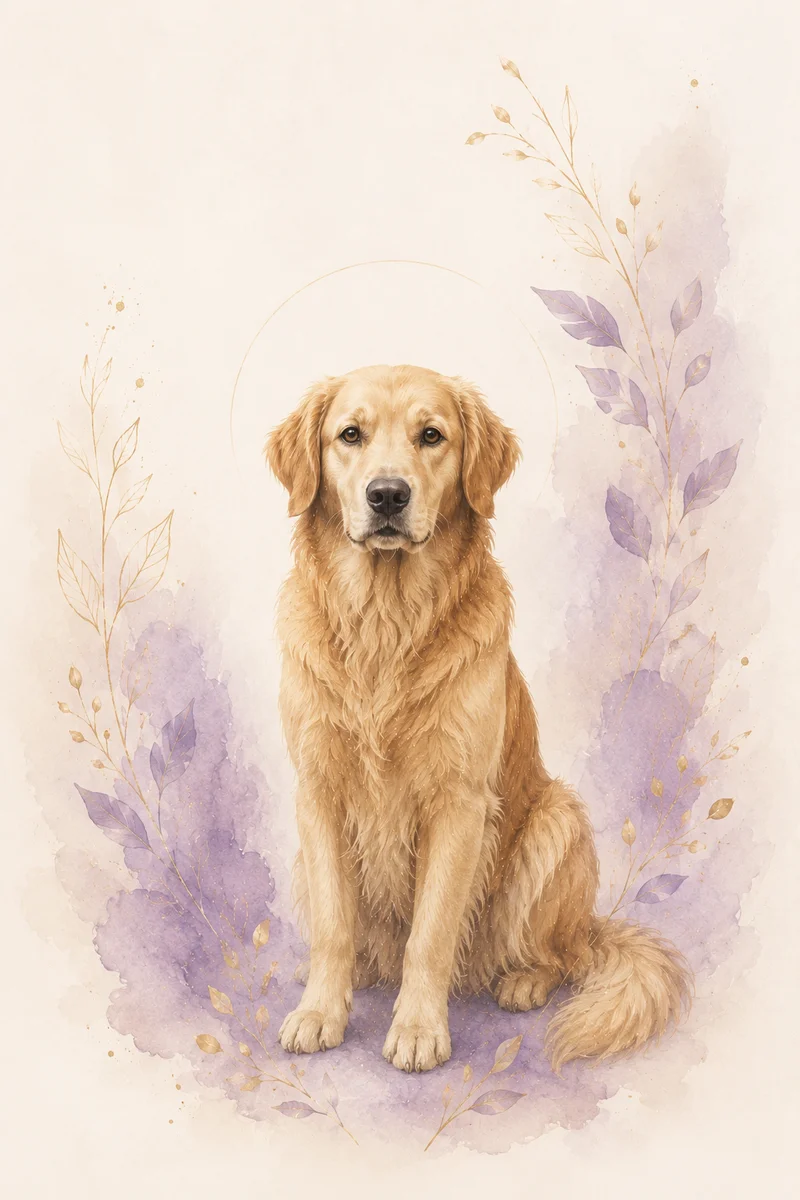
A dog makes attachment visible. It approaches, responds, returns, and stays present — affection expressed through consistent contact rather than careful distance.
That openness is real, but it isn’t the whole story: a bond like this only stays healthy when that consistency gets met with real reciprocity, safety, and room for its own needs too.
Dependable attachment
Joyful presence
Trust freely given
Loyalty mistaken for submission
Self-abandonment for approval
Dog Spirit Animal — What the Dog Means
Dog energy reflects dependable attachment expressed openly through consistent presence, while still needing reciprocity, safety, and room for its own needs to make that openness sustainable. It shows affection and loyalty readily, and stays present through a relationship’s harder moments, not only its easy ones — but that offering was never meant to happen without anything coming back.
That comes from a genuine wish to be depended on, to truly belong to someone rather than just something. Offering loyalty this openly isn’t naivety, and it isn’t the same as offering it unconditionally, either — it’s honest, up-front affection that still depends on being met.
Real Dog Behavior Behind the Symbol
Dogs are highly social, domesticated animals that form strong, lasting attachment bonds with humans and other animals, actively seeking out closeness and contact rather than waiting for it to come to them. They live cooperatively within a household or social group, closely reading and responding to human emotional cues — picking up on tone, posture, and mood with real accuracy.
Their evolutionary path leaned directly into this: rather than relying mainly on solitary survival skills, dogs’ advantage came from cooperative bonding and communication with humans themselves. Seeking closeness isn’t a side effect of domestication here — it’s close to the core of what shaped the relationship in the first place.
Sources on the real behavior behind this symbol: ncbi.nlm.nih.gov. Full methodology and all 64 animals: see our methodology and sources.
Light and Shadow
When it’s working well, dog energy offers real loyalty freely while still holding onto its own needs and identity — devotion that doesn’t require disappearing into the bond. The shadow side is subtler: giving itself away so completely to being needed that it loses any real sense of what it needs in return.
Worth naming clearly: none of this is submissiveness or a lack of independence — offering loyalty freely isn’t the same as having no self — and it doesn’t always describe a relationship that’s already healthy; sometimes it’s the wish for one. This also isn’t about hierarchy or obedience. It’s about attachment freely given, not rank.
Dog Energy in Love, Career, and Growth
In love, this tends to show up as consistent presence and open devotion rather than testing or withholding — worth watching for its own needs going quiet inside caring for someone else’s.
In career, it often thrives in loyal, team-based roles built on mutual trust and real dependability.
In personal growth, it can point toward keeping at least one need that belongs only to itself, even while giving real loyalty elsewhere.
The Inner Conflict — and Today’s Impulse
Dog’s instinct is to give itself fully to a bond, but complete devotion without limits can mean losing track of its own needs entirely. The useful shift isn’t holding back affection to protect itself — it’s keeping real loyalty while also holding onto at least one need that stays its own, undissolved into anyone else’s.
Beneath the surface, what helps most isn’t less openness — it’s a bond that actually meets that openness with real, consistent presence in return, and permission to want something back without that making the love conditional.
💭 Where are you giving loyalty so freely that your own needs have gone quiet?
Loyalty freely given is still worth something — as long as it’s still met.
Frequently Asked Questions
Is the dog my spirit animal?
If the dog keeps appearing in your thoughts, it may reflect a wish for open loyalty and companionship. On this site, spirit animal and power animal are two names for one idea: an animal whose qualities mirror something in your life at the moment, rather than who you are forever. The page also stresses that openness stays healthy with reciprocity. The Spirit Animal Quiz can show how close it feels today.
Does the dog power animal mean I’m too submissive or dependent on others?
Not primarily. Offering loyalty freely isn’t the same as having no self — this symbolism is about open attachment, not rank or submission, and it can describe a genuine wish for connection as easily as a bond already in place.
What’s the difference between the dog and the wolf as power animals?
Dog offers dependable attachment and openly given loyalty from the start. Wolf’s belonging is earned within a reciprocal peer group — both are about loyalty, just built through different paths to trust.
Can the dog appear when someone has been giving too much of themselves away in a relationship?
Yes — often as a prompt to notice where a real need has gone quiet inside caring for someone else’s. If self-abandonment for approval feels like an ongoing pattern, it’s worth naming to a trusted person or a professional rather than accepting it as simply devotion.
The idea of a power animal comes from shamanic and animistic traditions found in many cultures, and is widely used today in Neoshamanism.
Symbols tend to mean more in conversation than they do on a page. If the dog is asking something of you, Marie is a good place to find out what.
Related Power Animals
Wolf — shares the theme of loyalty, but leans more into belonging earned within a reciprocal peer group, while dog offers dependable attachment freely and openly from the start.
Cat — shares the theme of connection, but leans more into closeness that has to be chosen on its own terms each time, while dog’s closeness is offered freely and openly from the very start.
