
Coyote Spirit Animal Meaning: Resilience, Adaptability and Persistence
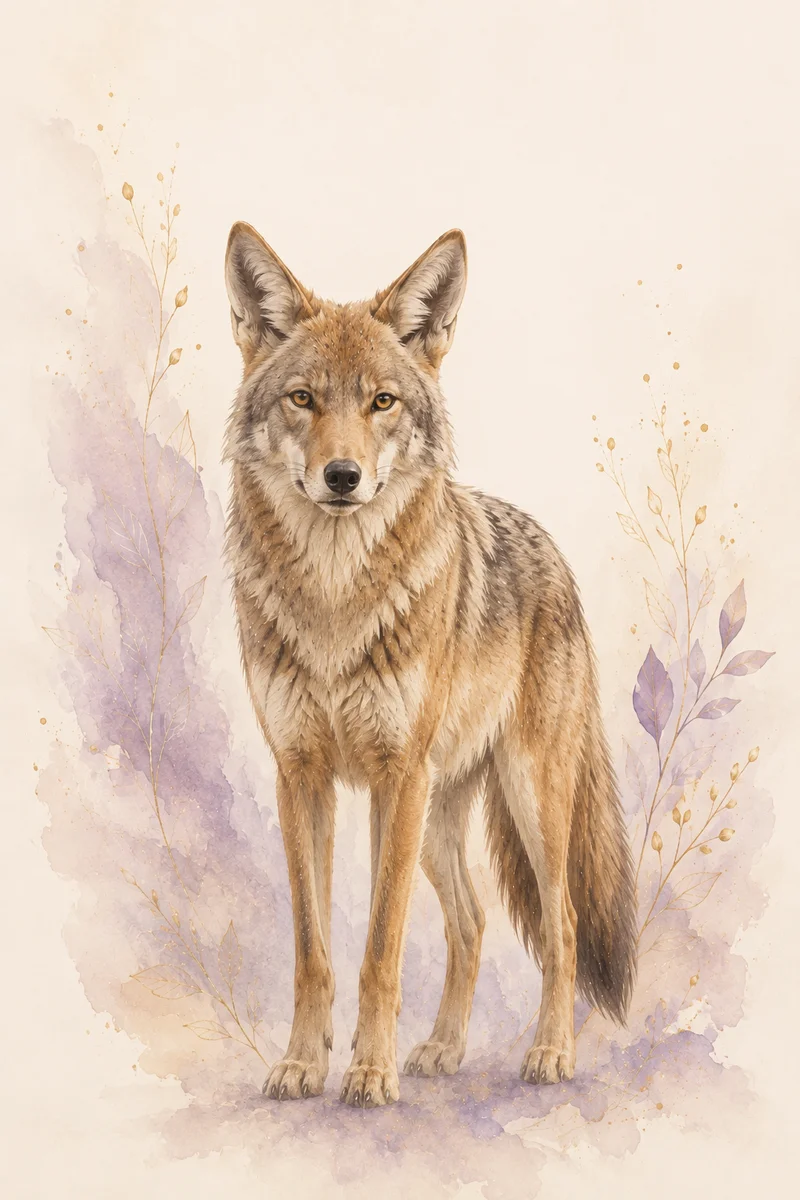
~7 min read
How does a species survive a century of deliberate, organized efforts to eliminate it, and come out the other side with a larger range than before? Coyotes did exactly that across North America — not through trickery, but through genuine, sustained adaptability.
That’s coyote energy in a single fact: resilience that finds real footing precisely because the ground keeps shifting underneath it.
Adaptability
Opportunistic persistence
Unshaken flexibility
Difficulty trusting calm
Rarely resting between challenges
Coyote Spirit Animal — What the Coyote Means
At its heart, coyote symbolism is resilience that becomes real strength through genuine instability, not despite it. Its power shows up precisely when circumstances keep shifting — relocation, upheaval, a role or a life that won’t hold still long enough to plan around — rather than needing things to calm down first.
That shows up as real resourcefulness under pressure and a readiness to change direction the moment an old route closes — coyote populations have actually expanded under sustained persecution, which is genuine strength, not luck. Underneath, it often carries a wary alertness for the ground to move again, paired with a real hope that this time it might hold.
Real Coyote Behavior Behind the Symbol
Coyotes are highly adaptable canids whose range has expanded across nearly all of North America even as, and partly because of, sustained human pressure and habitat change. Their social structure is genuinely flexible: depending on resources and population pressure, a coyote may live alone, in a mated pair, or in a small family group, with bonded pairs often staying together across several breeding seasons.
They’re opportunistic omnivores, shifting both diet and activity pattern to fit circumstance — more nocturnal near humans, more active by day in wilder terrain. Population studies have found something counterintuitive: heavy culling or persecution tends to trigger increased reproduction rather than simple decline, a real, measurable form of resilience under pressure, not folklore.
Sources on the real behavior behind this symbol: ifaw.org, projectcoyote.org. Full methodology and all 64 animals: see our methodology and sources.
Light and Shadow
In a healthy expression, coyote energy meets real instability with genuine resourcefulness and keeps moving forward without waiting for things to calm down first. The shadow side is quieter: staying braced for disruption even once a situation has actually become safe and steady, unable to fully trust ground that has, in fact, stopped shifting.
Worth naming clearly: this isn’t the folkloric trickster, inherently deceptive — coyote resilience is about adaptability, not deceit — and it isn’t a scrappy underdog story either. A population that has genuinely expanded under sustained pressure is showing real strength, and none of it means the hardship it moved through cost nothing.
Coyote Energy in Love, Career, and Growth
In love, this often shows up as staying present through real upheaval rather than needing calm first to show up at all — worth watching for a reluctance to ask for stability, having learned early not to expect it.
In career, it tends to thrive amid reorganization or a role that keeps changing shape, though commitment can get harder once a role finally does settle.
In personal growth, it often points toward letting small, repeated proof that a specific situation has actually settled slowly count for something, instead of discounting steadiness in advance.
The Inner Conflict — and Today’s Impulse
Coyote’s whole capacity comes from adapting instantly when circumstances shift, but constantly bracing for the next upheaval can make it hard to trust that any ground will actually hold. The point isn’t forcing calm or manufacturing stability — it’s letting repeated proof of a specific situation’s steadiness slowly count for something, rather than discounting it in advance.
What tends to help most isn’t more independence — it’s trust that at least some ground will hold, eventually, and recognition that this resilience is real strength, not just scrappy survival.
💭 What would it feel like to expect the ground to hold, even once?
You don’t need stable ground to be genuinely stable.
Frequently Asked Questions
Is the coyote my spirit animal?
The coyote can be a mirror for resilience, adaptability and persistence, particularly in times of change. Keep in mind that spirit animal and power animal describe the same idea here: an animal whose qualities echo a theme you are living through now, not a permanent identity or a verdict about you. Coyotes have spread across much of North America by adjusting how they live. The Spirit Animal Quiz can show how close it feels today.
Does the coyote power animal mean I’m being deceptive or a trickster?
Not primarily. The folkloric “trickster” framing suggests deceit; real coyote resilience is about adaptability under real pressure, not deception. Its meaning centers on thriving through instability, not outsmarting anyone.
What’s the difference between the coyote and the octopus as power animals?
Both are about adaptation, but coyote’s is resilience through actual, ongoing instability — thriving because circumstances keep shifting. Octopus’s adaptation is more about active, intelligence-driven problem-solving that reshapes itself while holding onto its own thread.
Can the coyote appear during a period that feels exhausting, without much real rest?
Yes — often when someone keeps adapting and recovering from one disruption after another without a real pause between them. If that pattern feels constant rather than occasional, it’s worth naming to a trusted person or a professional, rather than just calling it resilience.
The idea of a power animal comes from shamanic and animistic traditions found in many cultures, and is widely used today in Neoshamanism.
Where do you already live this? Where are you still reaching for it? Where might you be stuck in its shadow side? Marie can help you sit with all three.
Related Power Animals
Octopus — shares the theme of adaptation, but leans more into active, intelligence-driven problem-solving, while coyote is more about resilience built through actual, ongoing instability itself.
Chameleon — shares the theme of adaptation, but leans more into fitting an immediate social setting, while coyote’s adaptability is about weathering real upheaval in its circumstances.
