
Cat Spirit Animal Meaning: Closeness, Autonomy and Boundaries
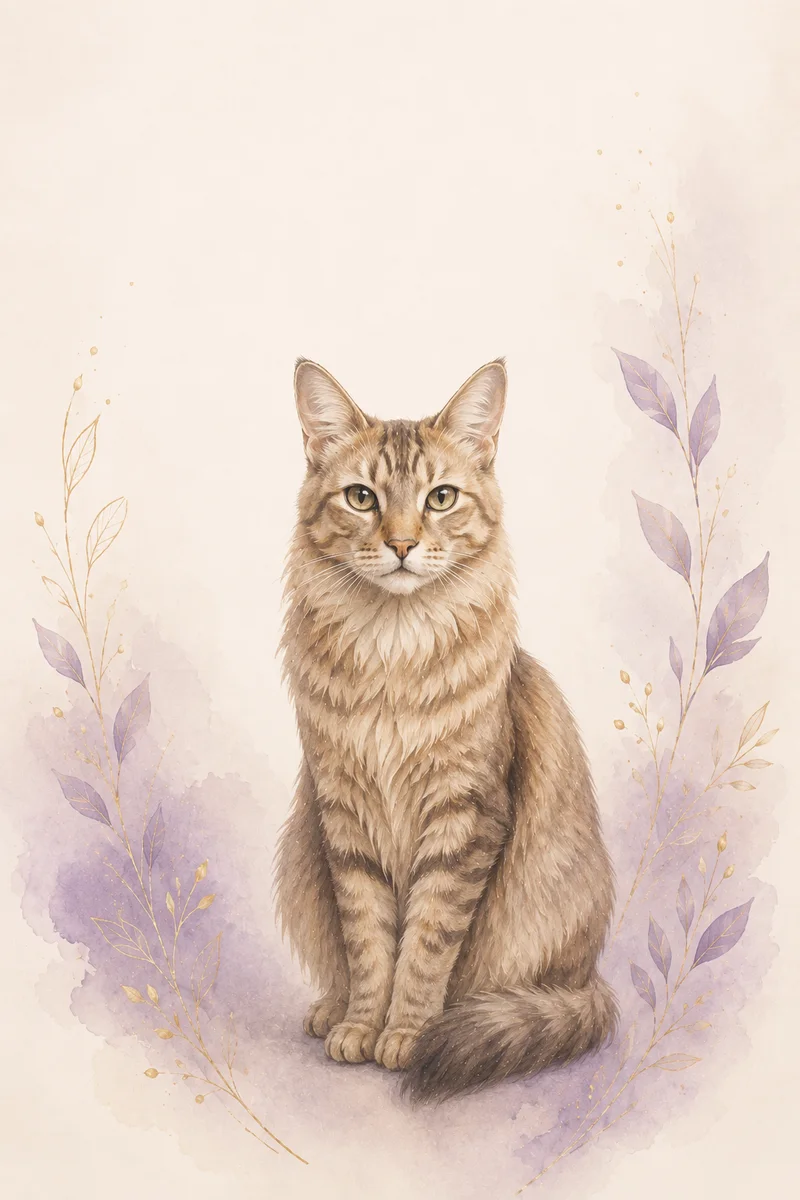
~7 min read
Late afternoon sun on a windowsill, a cat stretched into it, eyes closed to slits. Nothing about the posture asks for anything. Then a hand moves nearby, and the cat opens one eye, decides, and either leans in or doesn’t — the whole exchange settled in under a second, entirely on its own terms.
That small, unhurried choice is closer to what cat symbolism is actually about: not distance for its own sake, but a closeness that stays real precisely because it’s chosen.
Autonomy
Sensual presence
Fine boundaries
Boundaries misread as rejection
Guardedness after being pursued
Cat Spirit Animal — What the Cat Means
At its core, cat symbolism is about closeness offered entirely on its own terms — never demanded, never forced, and given selectively enough that it actually means something when it happens. A cat’s affection carries weight specifically because it isn’t automatic; it’s the outcome of its own timing, not anyone else’s expectation.
That shows up as genuine comfort in solitude that doesn’t rule out real intimacy, clear and quiet boundary-setting, and a presence that can look detached right up until the moment it chooses to fully engage. Underneath, it often carries a real pull between wanting closeness and needing that closeness to stay on its own terms.
Real Cat Behavior Behind the Symbol
Domestic cats alternate long stretches of rest and stillness with sudden, focused bursts of activity — a rhythm built around acute senses, patience, and precise timing rather than sustained pursuit or group coordination. Unlike many domesticated species, cats form selective social bonds, with humans and other animals, rather than defaulting to group living as their natural baseline.
That selectivity isn’t a lack of attachment. A cat that chooses to approach, again and again, over time, is doing something more deliberate than an animal that simply stays close because staying close is the default. Its stillness tends to be readiness held in reserve, not disengagement.
Sources on the real behavior behind this symbol: indoorpet.osu.edu. Full methodology and all 64 animals: see our methodology and sources.
Light and Shadow
At its best, cat energy offers real closeness precisely because it was never forced or assumed — connection that means something because it was chosen. The shadow side can look similar from the outside but comes from a different place: withholding connection reflexively, even once safety and trust are genuinely present, out of habit rather than an actual boundary being tested.
Worth naming clearly: none of this is coldness or an absence of real attachment — independence isn’t the opposite of bonding. Boundaries here aren’t rejection, and stillness isn’t disengagement; they’re often exactly how this kind of closeness stays real.
Cat Energy in Love, Career, and Growth
In love, this tends to show up as deep affection that has to be approached on its own timing — worth noticing if it’s being pursued or pressured rather than allowed to arrive.
In career, it often favors real autonomy and trust over close oversight, where independence has room to actually function.
In personal growth, it can point toward reclaiming the right to set the pace of one’s own closeness, especially after relationships that felt assumed rather than chosen.
The Inner Conflict — and Today’s Impulse
Cat energy holds a genuine push-pull between closeness and autonomy: it wants real intimacy, but only on terms that don’t compromise its own independence. A constructive response isn’t picking one side permanently — it’s recognizing that closeness offered freely, on your own terms, chosen again and again, isn’t a lesser form of connection than closeness given automatically.
Beneath the surface, what helps most isn’t more distance — it’s trust that saying no won’t end the relationship, and enough security to hold both real intimacy and real space at once.
💭 Where are you offering closeness because it’s expected, rather than because it’s real?
Chosen closeness is not lesser closeness.
Frequently Asked Questions
Is the cat my spirit animal?
Perhaps, if closeness, autonomy and healthy boundaries are what you are exploring. The words spirit animal and power animal are used for the same idea here: an animal whose qualities mirror a current theme in your life, not who you are for good. Cats form selective bonds and alternate rest with focused bursts of activity. The Spirit Animal Quiz can show how close it feels today.
Does the cat power animal mean I’m cold or emotionally unavailable?
Not primarily. Cat symbolism is about closeness that’s selective rather than absent — affection that means something because it isn’t automatic, not a lack of real attachment.
What’s the difference between the cat and the dog as power animals?
Dog symbolism leans more toward attachment offered freely and openly from the start. Cat symbolism centers more on closeness that has to be chosen on its own terms each time — both are real forms of connection, just built differently.
Can the cat appear during a period of setting boundaries in a relationship?
Yes — often as a prompt to notice whether closeness is being offered because it’s genuinely wanted or because it’s expected. If boundary-setting feels tangled up with fear of losing the relationship altogether, it can help to talk that through with a trusted person or a therapist, rather than working it out alone.
The idea of a power animal comes from shamanic and animistic traditions found in many cultures, and is widely used today in Neoshamanism.
Where do you already live this? Where are you still reaching for it? Where might you be stuck in its shadow side? Marie can help you sit with all three.
Related Power Animals
Dog — shares the theme of connection, but leans more into dependable attachment offered freely from the start, while cat’s closeness needs to be self-directed and chosen each time.
Lynx — shares a sense of independence, but leans more toward hidden perception and solitary withdrawal, while cat’s autonomy is specifically about boundaries within closeness, not withdrawal from it.
