
Lenormand The Whip – Meaning, Symbolism & Combinations
Lenormand cards are part of the broader European tradition of cartomancy, the practice of fortune-telling using cards.
The Whip cracks through the air — and just before it lands, you recognize it: I know this. This has been here before. Because that’s the real subject of this card: not the individual conflict, but the pattern that keeps producing it. Arguments that follow the same structure no matter who you’re with. Reactions to stress, to criticism, to closeness — that repeat even when the person changes. In Lenormand, the Whip stands for conflict and confrontation — but anyone who only reads the surface misses the deeper point: the fight itself isn’t the real subject. What generates it is. This card doesn’t ask “who’s right?” It asks “what in you keeps producing this situation?” At the same time, the Whip also carries the energy of discipline — self-discipline, consistent boundaries, the ability to clearly name what’s unacceptable. Not every Whip strikes — some simply show where consequence is missing. The classic image shows a bundle of rods — several bound together, sometimes with a ribbon. Not a single rod but many: repetition as a visual theme built right into the symbol itself. Today’s Petit Lenormand carries Marie Anne Lenormand’s name, but she didn’t design it. Its 36 images trace back to Johann Kaspar Hechtel’s “Spiel der Hoffnung” (“The Game of Hope”), published around 1799 — the deck was named after her only after her death. Experienced readers don’t see the Whip as a threat, but as an honest signal pointing to conflicts that need attention. Classic meanings: Conflict · argument · confrontation · repetition · pattern · discipline · punishment · persistent difficulties · disputes · family conflict · repeated mistakes · demanding consequence The Whip shows conflict — but its real message runs deeper: it shows the pattern beneath the conflict. What keeps repeating in your life isn’t bad luck or coincidence. It’s a sign pointing to something not yet resolved — a belief, a reaction, a dynamic that keeps attracting the same situation. In social contexts, the Whip shows disputes that drag on — not a brief argument, but ongoing tension. That can be a recurring discussion in a relationship, a workplace conflict that never gets resolved, or a family dynamic that has been running for generations. The constructive side of the Whip is discipline and consequence. Where clear boundaries are missing, the Whip grows. Whoever is consistent — with themselves and with others — needs the Whip less often. The Whip in love questions shows recurring conflict in a relationship — the same arguments, again and again. That’s not a sign the relationship is bad, but that a topic hasn’t truly been looked at yet. What are you really fighting about? Often it’s something other than what’s actually being said. Professionally, the Whip shows ongoing tension — with colleagues, superiors, or in your own way of working. Sometimes: repeated mistakes that grow more costly each time. The question isn’t who’s to blame, but which pattern keeps producing the situation. However positive or difficult a card sounds, every health interpretation remains symbolic. It never replaces diagnosis or treatment; seek qualified medical advice for symptoms or concerns. In health questions, this card should be understood symbolically only. Its central theme may prompt reflection on wellbeing, daily routines, and self-care, but it cannot indicate a diagnosis, cause, pregnancy, treatment, or outcome. For symptoms or specific health concerns, qualified medical advice is the appropriate resource. Leaning No — at least not without clearing things up first. The Whip signals that an unresolved conflict or an old pattern is standing in the way. Clean it up first, decide after. Reading note: The combinations below describe traditional symbolic interpretations and possible reflection prompts. They do not predict events or establish facts about health, finances, or another person’s feelings and intentions. Jump to Combination Information you receive stirs up rivalry or friction you didn’t ask for. Handle it with a level head rather than rising to every provocation. Someone may unexpectedly start competing for the same attention you are, whether that’s a job, a goal, or even a person you care about. A small quarrel or some friction runs through your life without leaving deep marks. You can let it go instead of holding on to it, and that does you good. A short, honest talk often clears the air. A conflict in your circle may spill over and touch your own life more than you’d like. With trips or plans, there may be friction about how or where you meet. Patience helps more here than insisting on your own way. Tension is building at home: guilt, friction, or unspoken anger, often in familiar family patterns. The strain often eases only once you have the honest conversation you’ve been avoiding. Think about what you need so that your home becomes a place to recharge again. You may be carrying a pain, physical or emotional, that repeats in familiar patterns and wants to be acknowledged rather than pushed aside. Notice what triggers it, and give your body and soul what they need. If symptoms persist, medical advice can help. A tension may be simmering beneath the surface that hasn’t been spoken yet. This easily leads to misunderstandings and can set off old patterns. Stay alert, calmly bring up what’s unclear, and check whether your own reactions already feel familiar. A conflict may not be fought openly but carried out indirectly and with strategy. That can heighten tension. Pay attention to your gut feeling, address what feels off calmly and directly, and don’t let yourself be pulled into games you don’t want to play. A burdensome pattern or a quarrel has come to a head and is now at a point where something may be ended. Drawing a line can be a relief. Trust the feeling that warns you, and don’t be afraid to step back. Your kindness and generosity may be called on more often than is good for you, and friction arises because little comes back. Giving is lovely, but it’s fine for it to stay in balance. You’re allowed to set clear boundaries and say no now and then. A sudden disagreement can flare up and escalate quickly if no one steps on the brakes. The tension is sharper than usual, whether in everyday life, at work, or in a relationship. Take a breath before you react: a calm word now can keep it from cutting even deeper. There’s a lot of talking, discussing, and arguing back and forth, but a solution is barely in sight. The same topics keep coming back, and the conversations wear you down. Take a breath before you answer, and consider whether a calm one-on-one conversation would accomplish more than further debate. Old patterns from your childhood or family are repeating in your adult life and can trigger arguments or hesitation. Recognizing where this reaction comes from is the first step beyond it. Be patient with yourself and ask what the child within you needs right now. In your circle, a dispute can arise from half-truths or maneuvering and get worse. Not every claim is true, and not every lack of clarity is intentional. Stay factual, check what you’ve heard, and talk directly with those involved instead of believing rumors. Someone with influence or authority is using it in a way that feels unfair or controlling, and conflicts are arising. Dominance rarely solves problems. Look into what’s behind it and stick to your boundaries, because you’re allowed to state your view clearly and calmly. Hope and a new perspective can help break an old pattern. If a recurring conflict is exhausting you, inspiration, perhaps through rest, inner work, or an outside view, can show you a new way. Insight usually grows slowly. You may feel restless or angry energy connected to an upcoming change. Try to channel it into something constructive instead of letting it simmer. Friction can also arise from other people’s behavior, and that rarely has only to do with you. A heated argument with someone you trust has left the mood tense, and it hits you harder than arguments with strangers. Cool down first before you try to mend things. An honest conversation can even strengthen the connection in the end. This is a moment to stand firm against aggression coming from others — do not shrink from defending yourself. You have built emotional walls after past hurts, and it is understandable, even if it now keeps people at arm’s length. Notice when protection has quietly become isolation. You may feel attacked by a group or community, whether verbally or through a hostile atmosphere, and that unsettles you. Stay true to yourself and look for allies on purpose. Not every group dynamic has to do with you. An unresolved conflict is draining more of your energy than you have consciously noticed. That same tension is sitting heavily on your heart, unresolved and quietly exhausting. Naming it out loud, even to yourself, is the first step toward relief. An upcoming decision is causing inner conflict, and it’s hard to find peace as long as it stays open. You may feel torn because you have to choose between two paths. There’s no rush: clarity usually comes once the noise settles. An ongoing dispute or recurring friction can quietly gnaw at your strength, more than you may realize. Often it isn’t the single conflict that drains you, but the feeling that nothing gets resolved. It’s worth asking honestly where you’re losing energy and how much of it you can win back. Your feelings for someone are bringing real heartache along with them, and that pain deserves acknowledgment. You are carrying a heavy heartbreak because of this one person. Be gentle with yourself as you move through it — healing is not linear. A connection or agreement is strained by arguments that keep coming back. Often behind the individual quarrel there’s a pattern that wants to show itself. If you look at it honestly, it can also bring more clarity about what you really want to promise each other. Knowledge and good preparation can give you something to stand on now when someone challenges your position. People who are well informed usually stay calmer in disagreements. It can also be about discipline in learning: regularity gets you further than short bursts of zeal. A curt or hurtful message may hit you harder right now than you would have expected. With written disputes, complaints, or formal letters, it often helps not to reply right away. Read it calmly, separate the factual from the emotional, and reply only once you’ve collected yourself. A man from your daily life may be causing friction, for example through an arrogant or demanding manner that strains your patience. It can also be a part of you that treats you very harshly. You’re allowed to set boundaries and protect your peace. A woman near you may be causing friction or tension, or you recognize a recurring pattern in yourself when it comes to conflicts. It helps to look closely at what keeps repeating. You don’t have to put up with discomfort just to keep the peace. You may be holding yourself to very strict standards, and that increasingly feels more like self-criticism than integrity. Discipline can sustain you as long as it leaves room for gentleness. Ask yourself whether your bar is realistic or just wearing you out. After a period of tension, things can brighten: a confrontation often leads to more clarity and a better outcome than you feared. It can help to address the conflict openly instead of avoiding it. Notice what feels lighter afterward. A feeling of shame or insecurity has settled over you, perhaps stronger than you’ve ever said to anyone. Behind it there may be a recurring pattern that embarrasses you. Be gentle with yourself, because everyone stumbles sometimes, and what is spoken aloud often loses its weight. A conflict can resolve when an insight or a clarifying conversation finally breaks the old pattern. It often helps not to hide what’s weighing on you, because others can only support what they see. Even small steps toward more honesty often open more than you’d expect. Tension can arise around money or a professional project, and differing views are slowly coming to light. Recurring arguments about finances often point to unclear agreements. Clarifying responsibilities and amounts honestly and early usually prevents bigger conflicts. What long felt like a safe, stable place, such as a habit, a role, or an arrangement, is increasingly causing friction. That doesn’t have to mean an ending, but can show that something honest wants to be addressed. Often it’s precisely what’s familiar that needs a clarifying conversation. Your convictions or a strong sense of duty are putting you in an inner dilemma right now. A conflict that can’t simply be resolved can wear you down, especially when it keeps repeating. You deserve clarity, even if it means a harder decision. The Whip stands for conflict, confrontation, and repeating patterns. It shows not just the individual argument, but what keeps generating it. The deeper message: what repeats is waiting to be understood. Not necessarily. The Whip can also show discipline, consequence, and the need to enforce boundaries. In some contexts it stands for the necessary clarity that prevents conflict when applied in time. The difference lies in the context of the spread. In love questions, the Whip shows recurring conflict that points to an unresolved core issue. The question isn’t who’s right, but what’s really behind the argument. Couples counseling or a deep conversation can help more than yet another discussion. As a daily card, the Whip warns against unnecessary conflict and calls for self-discipline. Today is a day to choose your reactions consciously instead of letting them happen automatically. At the same time: if a boundary needs to be drawn, do it now — clearly and consistently. Let these questions settle — you don’t have to answer right away. The meaning above is true for everyone. For you, it only becomes clear with your situation. Tell Marie about it, and she shows you what this card can mean for you.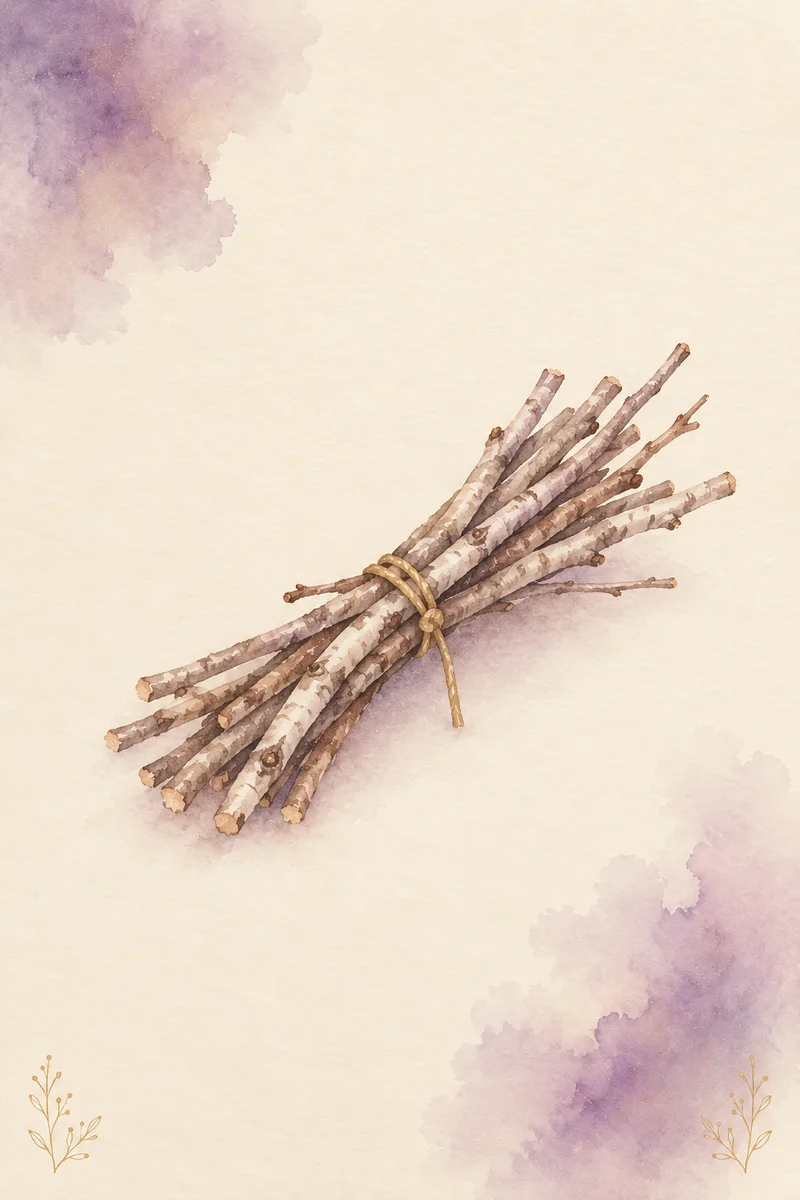
The Whip – The Image & Its Symbolism
Symbol
Meaning in Lenormand
The bundle of rods
Repetition — not once, but many times. What begins with a single rod arises out of a pattern. The bundle shows the frequency.
The binding
Holding together what belongs together — but also: being trapped in a pattern that’s hard to loosen. Bound by repetition.
The flexible material
Rods bend — they don’t break at once. The conflicts this card shows are often drawn-out and persistent, not explosive and quickly over.
The implied pain
Rods were historically used for punishment. The card carries that energy: consequences, pain through repetition, the result of lessons not yet learned.
The natural material
Rods grow — conflicts don’t come from nowhere, they grow out of something. The material is organic: patterns have roots.
The playing-card image (Jack of Clubs)
The Jack of Clubs stands for unrest and conflict — fitting for the combative energy of the Whip.
The Whip in Lenormand Tradition
Classic Lenormand Interpretation
The Whip – Meaning & Message
The Whip in Life Areas
In Love
Career & Finances
In Health
The Whip – Yes or No?
The Most Important Combinations with The Whip
+ The Clover
+ The Ship
+ The House
+ The Tree
+ The Clouds
+ The Snake
+ The Coffin
+ The Bouquet
+ The Scythe
+ The Birds
+ The Child
+ The Fox
+ The Bear
+ The Stars
+ The Stork
+ The Dog
+ The Tower
+ The Garden
+ The Mountain
+ The Crossroads
+ The Mice
+ The Heart
+ The Ring
+ The Book
+ The Letter
+ The Gentleman
+ The Lady
+ The Lily
+ The Sun
+ The Moon
+ The Key
+ The Fish
+ The Anchor
+ The Cross
The Whip + The Rider
The Whip + The Clover
The Whip + The Ship
The Whip + The House
The Whip + The Tree
The Whip + The Clouds
The Whip + The Snake
The Whip + The Coffin
The Whip + The Bouquet
The Whip + The Scythe
The Whip + The Birds
The Whip + The Child
The Whip + The Fox
The Whip + The Bear
The Whip + The Stars
The Whip + The Stork
The Whip + The Dog
The Whip + The Tower
The Whip + The Garden
The Whip + The Mountain
The Whip + The Crossroads
The Whip + The Mice
The Whip + The Heart
The Whip + The Ring
The Whip + The Book
The Whip + The Letter
The Whip + The Gentleman
The Whip + The Lady
The Whip + The Lily
The Whip + The Sun
The Whip + The Moon
The Whip + The Key
The Whip + The Fish
The Whip + The Anchor
The Whip + The Cross
Frequently Asked Questions About The Whip
What does The Whip mean in Lenormand?
Does The Whip always mean an argument?
What does The Whip mean in a love question?
What does The Whip mean as a daily card?
Reflection Questions
