
Sorrow – Kipper Card Meaning, Symbolism & Combinations
Kipper cards are part of the German tradition of fortune-telling with cards, closely related to the broader European practice of cartomancy.
Sometimes it simply hurts. Sorrow is the card of genuine pain — not dramatised, not exaggerated, but the real emotional suffering life sometimes brings. It shows a phase in which the burden is heavy and the tears are close, or have already fallen. In the Kipper system it is one of the heaviest emotional cards — honest in naming things, without softening them. But it shows a state, not an eternity. Sorrow belongs to life. It changes you, it matures you, it teaches you — even when that’s impossible to see in the moment of pain. The card is a reminder: allowing pain isn’t a sign of weakness, but of being human. Sorrow indicates a phase of emotional burden — pain, grief, disappointment, or a heavy inner weight. The surrounding cards show the cause: it can be heartache, the pain of a loss, disappointment over a hope that failed, or an ongoing emotional burden from outer circumstances. Next to love cards it shows emotional pain in a relationship question. Next to Death it shows grief over a loss. Next to positive cards its weight is eased — the pain is real, but not overwhelming, and the overall context stays positive. It’s a reminder that sorrow wants to be processed — not suppressed, not rushed, but lived through. That takes as long as it takes. In love questions, Sorrow shows heartache, the pain of separation, or emotional disappointment in a connection. The heart hurts — for exactly what reason, the surrounding cards show. This pain is real and deserves to be taken seriously. Professionally, Sorrow can point to emotional strain from the work situation — disappointment over a failure, sadness over losing a job, or the heavy emotional weight of a professional decision. Health interpretations are symbolic only and never replace diagnosis or treatment. Use the card, at most, as a prompt for reflection; seek qualified medical advice for symptoms or concerns. In health questions, Sorrow can symbolically stand for emotional stress and psychological strain affecting overall wellbeing. The card describes the emotional state — not a physical diagnosis. Professional advice remains essential. Tendency: Rather no — the emotional energy is heavy and burdensome. What’s possible in this phase is shown by the surrounding cards. How to read these combinations: The examples are symbolic possibilities, not fixed events or facts about other people. Consider the question, context, and verifiable information. Sorrow + Hope (36): Even in the heaviest phase, hope remains — the suffering has an end, even when it isn’t felt right now. Sorrow + Great Fortune (26): Pain within an otherwise favourable context — the sorrow is real, but the overall picture stays positive. Sorrow + A Change (9): Sorrow triggers a necessary change — pain as a turning point that opens a new path. Sorrow + Sad News (14): Pain caused by a distressing message — news that hits hard and lingers. Sorrow + His Thoughts (16): Emotional pain processed inwardly — intense thought and grief go hand in hand. Sorrow + Expectation (28): Painful waiting — the uncertainty is made heavier by emotional burden. Sorrow + Death (19): Deep grief over a loss — one of the heaviest emotional combinations in the deck. Sorrow + Prison (29): Stuck in pain — a phase in which neither movement nor relief is in sight. Sorrow + Gloomy Thoughts (33): Emotional pain combined with negative spirals of thought — a particularly burdensome combination. As a card of the day, Sorrow invites you to be honest about what hurts — without pushing it away or explaining it away immediately. Sometimes the most courageous act of the day is simply to feel what you feel. Today is a good day to be gentle with yourself. Sorrow (No.32) indicates a phase of emotional burden — pain, grief, disappointment, or a heavy inner weight. The card names the state honestly, without dramatising or softening it. The card shows a state, not an eternity. How heavy and how long the phase is, is shown by the surrounding cards. Next to positive cards the weight is eased; next to very difficult cards the burden can be greater. The card invites you to accept the pain instead of suppressing it. Sorrow wants to be processed — lived through, not rushed. The surrounding cards show what resources and possibilities are still present. Got a question on your mind and this card in front of you? Ask Marie directly. She reads the card for exactly that question and explains it step by step. Let these questions work on you — without needing to answer right away.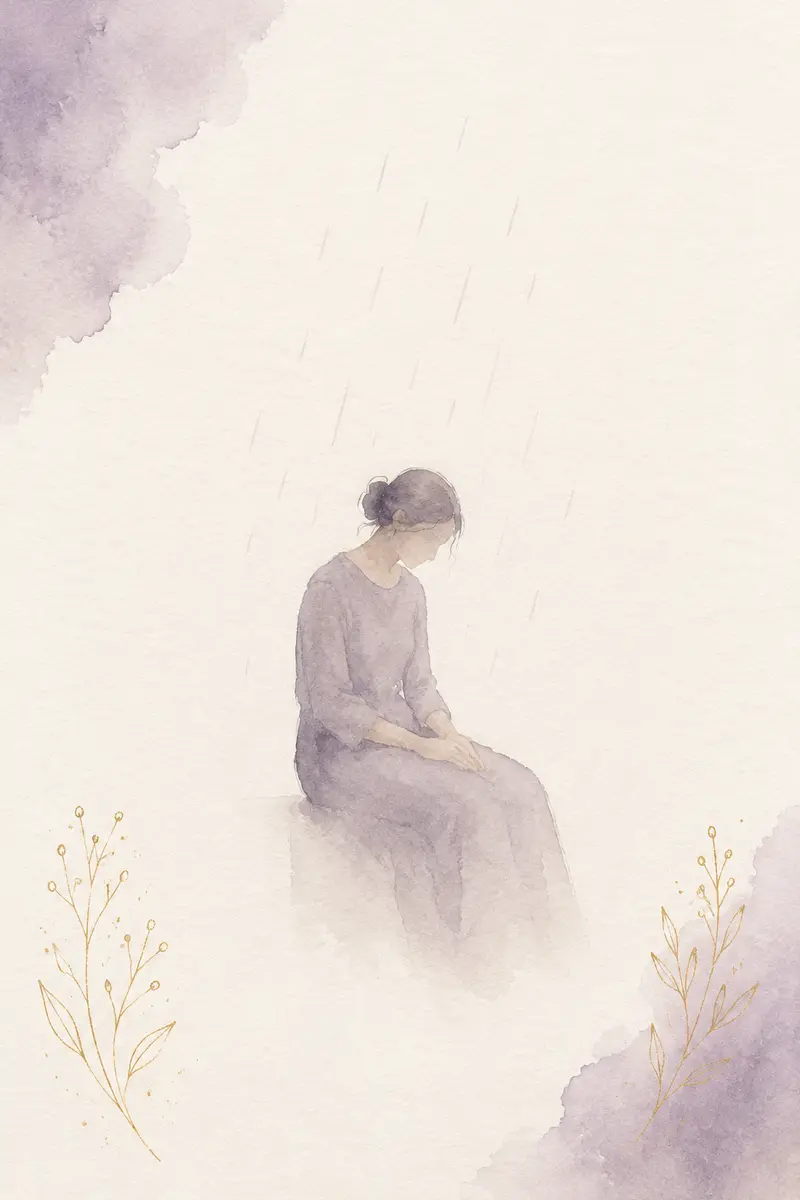
Kipper Card Sorrow — The Card’s Image – Symbolism & Meaning
Symbol
Meaning in the Kipper Card
The Grief
Genuine emotional pain — not performance, but inner experience. The card shows the state, not the cause.
The Burden
Something weighs heavily — a situation, a loss, a disappointment that weighs more than you’d like to carry.
The Tears
The outward expression of inner pain — allowing emotion as an honest response to what is.
The Number 32
Numerologically, thirty-two connects with processing experience — sorrow as part of a deeper learning process.
Sorrow – General Meaning & Message
Sorrow in Life Areas
In Love
In Career & Finances
In Health
Sorrow – Yes or No?
Important Combinations with Sorrow
Positive Combinations
Neutral / Situational Combinations
Challenging Combinations
Sorrow as a Daily Card
Frequently Asked Questions about Sorrow
Kipper Card Sorrow: What does Sorrow mean in the Kipper cards?
Does Sorrow mean I’ll suffer for a long time?
What helps when Sorrow appears in a reading?
Reflection Questions
